
What started as a bouquet for friends has grown into a transcontinental floral studio working with Spotify, Apple, Amazon, and even styling Rolling Stone covers and rooftop parties at Chateau Marmont. In this candid conversation with David Litwak, Jake Kale, founder of Cobra Lily, traces the arc from set design and production to a pandemic-born business that’s equal parts commerce and art. He explains how scarcity sharpened his voice, why signature work must be both mysterious and recognizable to other florists, and why collaborations with photographers and artists keep him pushing the craft forward. Read on for a deep dive into the hustle, the creative judgment calls, and the projects that keep him excited to show up every morning. Let’s start.
Rooted in Risk: Jake Kale on Building Cobra Lily — From Freelance Florist to Rolling Stone Shoots
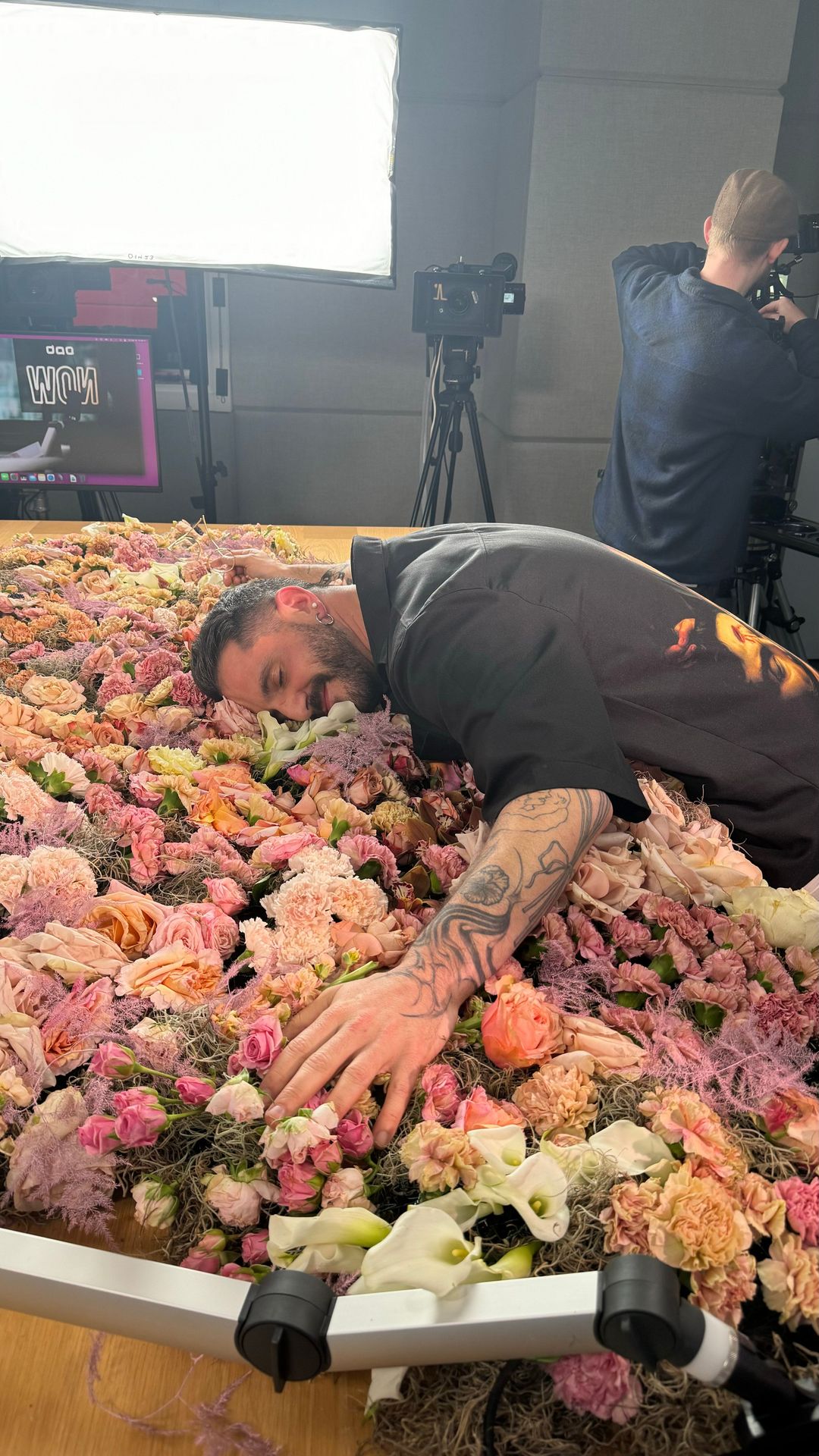
David Litwak: You can just get started by telling me about Cobra Lily, your business, and how you started.
Jake Kale: I started Cobra Lily in 2019, so about six years ago now. I’ve been working in floristry for almost nine years. It came up initially as just a way to put a name on what I was doing for friends’ weddings, since I was mostly freelancing for a long time.
Before that, I’d been working in a lot of creative spaces, set design, production, photography; I always had my hands in a million things. That’s how I eventually found my way into flowers. I never planned on having my own business necessarily. It was more like, “Oh, my friends are naming their little wedding businesses, I should do the same.”
And then, because of the pandemic and opportunities to freelance shrinking, I suddenly had all this time on my hands. It started off as, Hey, this is a great time to get flowers to people while they’re at home. I figured people would want to be surrounded by beautiful things, especially since they were stuck inside, not going out, and maybe even had some extra money to spend. That’s when I started building Cobra Lily bit by bit.
I’m grateful that the pandemic gave me the opportunity to really focus in on what my style is and who my clientele would be. Things have just taken off from there.
Today, Cobra Lily is well, it’s crazy to say this, but it’s a company that works in multiple countries. I’m flying all around North America doing work. I get hired by companies like Spotify, Apple, and Amazon, just the biggest ones.
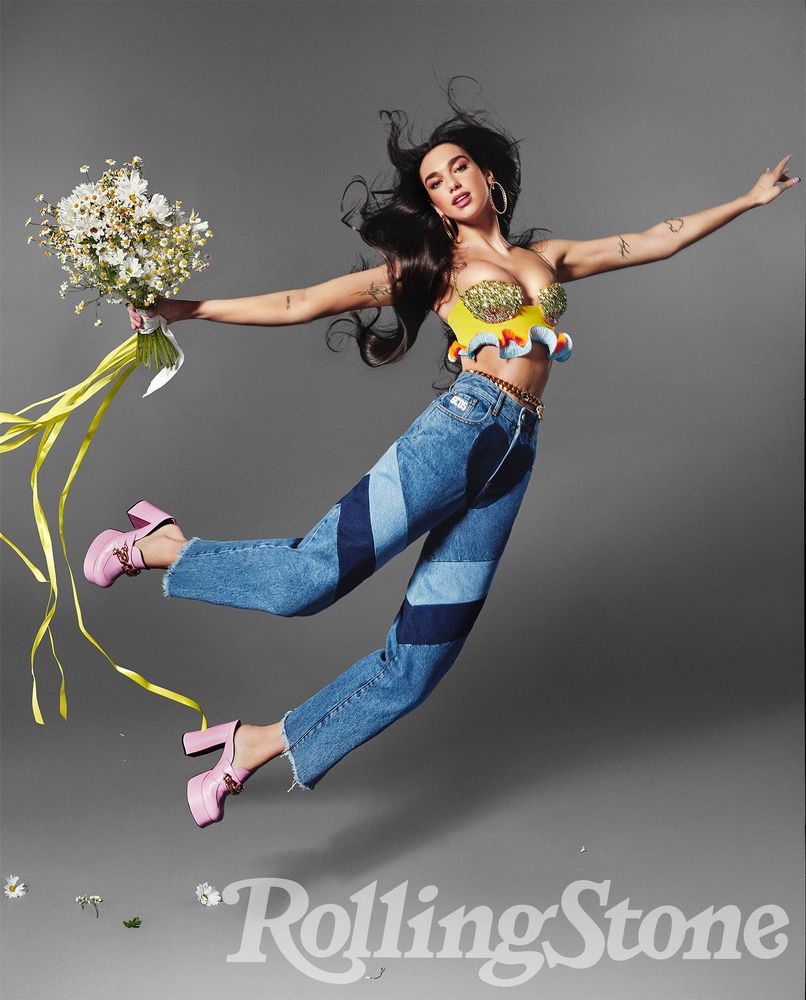
I’ve done Rolling Stone cover shoots with Dua Lipa. I’ve found myself in these incredible places where I’m so grateful to be. A lot of that comes from being from LA, nurturing connections over the years, and having people who champion me.
I think people respond not just to entrepreneurs, but to creatives who stick to what comes from within. That’s opened so many doors, where I can present what I do as both an art form and a commercial product.
I’m constantly in awe of the projects that come my way. But more than the names, it’s that I get to continually do what I love. The longer I stay in this, the more I get projects where people actually ask, What do you want to do? That’s a really nice place to be, because for many years it wasn’t that way.
Now, I’m fortunate to bring my ideas to the table and have them respected. At the same time, I’m always learning, growing, and trying to expand. That’s the curse of being in a creative position: a job wraps up and I immediately think, Well, that’s over. What’s next? Will I ever work again? How can I push it farther next time?
You’re always in that flow state, trying to figure out not just the next big financial project, but also the next creative one.
David Litwak: I’m taking it that Maxwell’s nylon X Cetaphil was not the coolest one you’ve done it for that.
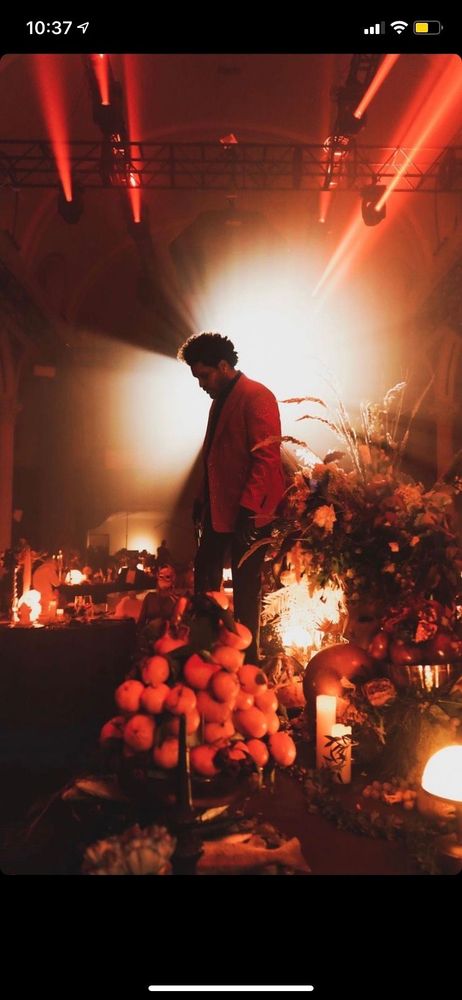
Jake Kale: There were things there that I was able to creatively pull out. Like having, I don’t know if you remember, there were some candles where we had what looked like wax dripping, but that was all like preserved and dyed amaranth.
So there were places where I could really dig in and say, like, how can we creatively make an interesting experience here?
And yeah, it’s red on red. It was beautiful. It was luxury, but it was also about like adapting to the space, the timeline, the product, the two different, you know, corporate entities that were in the room, and satisfying everybody. And that’s the challenge of the job.
And then I also have to meet other people’s goals while still meeting mine.
And, you know, you want to make sure everybody is happy. And, you know, ironically, that single job has gotten me several others. There was another job I did at Maxwell that was recommended by you guys to another client. And then that client brought me on to several other jobs.
And then I’ve had other people reach out and say, Hey, can you do something like this again? So, to be fair, I actually loved it.
David Litwak: Running Maxwell, you realize there's a science to some parts of it. You can do ads and posts to get more business. But a lot of it is just personal connection and good old-fashioned relationship building. And it's hard to always know what the ROI is for those efforts going in. But then things like that happen, and you realize it is 100% necessary. It's tough being in that business and doing a bunch of things.
And sometimes it's for exposure or figuring out how you're going to get your name out there more, so that you get inbound. It's tough.
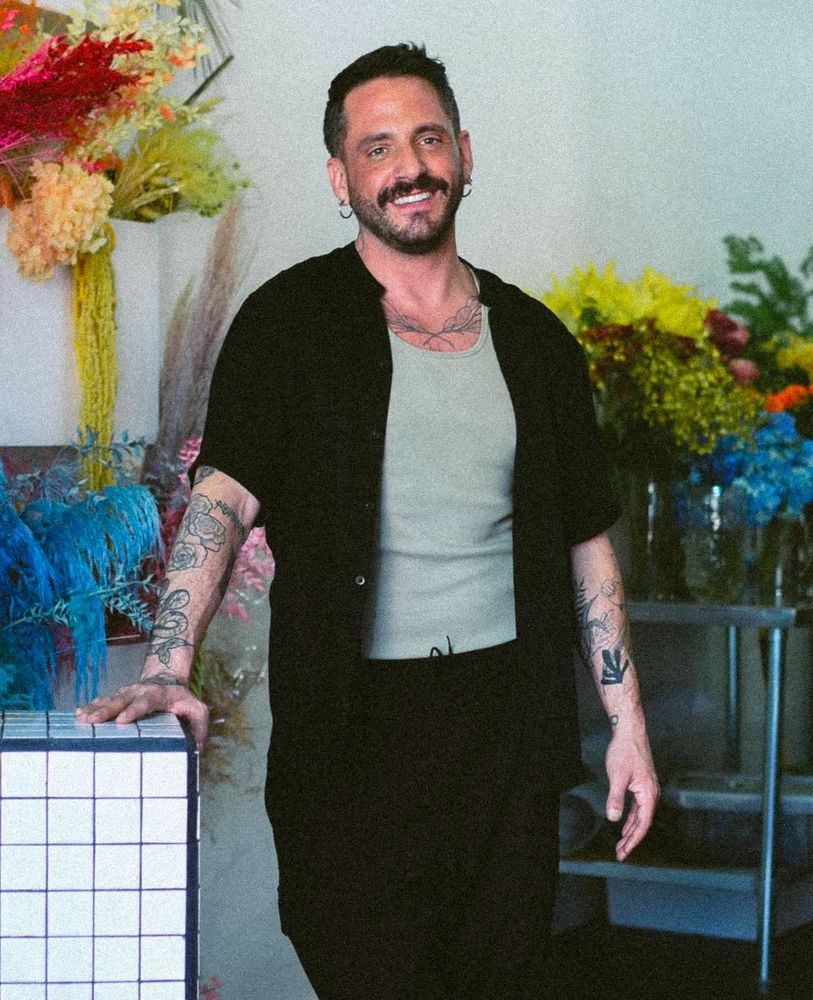
Jake Kale: It's not always about the paycheck. And sometimes it's the projects where you have the lowest profit margin that push me further creatively, and I end up much happier with the result because there was a new level of ingenuity. That's also why it's important to be selective about my jobs, and that doesn't always mean the paycheck. Is it possible for me to execute what I do well on this project?
And, like you said, you never know. That's why you have to give it your all every time. When I phone it in, I can tell, my client can tell, the pictures tell a story. It's about continually pushing yourself, because the ROI, you don't get told that ahead of time. I'll work until midnight, planning a project five days in a row, thinking this is not worth my time. And then some beautiful thing comes out of it. You just have to keep pushing.
I'm very grateful for what I do because there's a low bar with florals in the sense that they're doing so much heavy lifting. People like flowers—they're beautiful. I could bring something very standard, and people will be impressed. It's when you go above and beyond that you really shine, but it's a nice point of entry because people are already happy. My job is 95% of the time bringing joy. I'm not giving people parking tickets on the street. I feel very lucky that my job is not making people's days worse.
It's 95% of the time, making their day better. And I feel blessed to have that kind of position. And when I can also impress them along the way, that's even better.
David Litwak: You said something interesting, that a lot of people can be wowed by something fairly standard. Tell me some inside baseball. How do you recognize excellence in another florist? Do you go, Oh wow, that was complicated, versus, No, that looks complicated, but it’s actually simple? Is there a type of arrangement or technique? When you see something, how do you know? I respect these guys.
Jake Kale: For me, there are a couple of categories. The first one is: if I look at something and I cannot figure out how they made it.
As a florist, there are a few standard production methods we use to build an installation. But sometimes you look at a photo and think, I don’t get it, where’s the water source, how is this built, how is it hanging, how did you make this happen in that space?
When I can’t figure it out, there’s a level of respect. Part of what we’re doing is using our imagination, but we also want to transport somebody. And if I, as another florist, can’t immediately see the method, that’s a high-level sign for me.
Another marker is recognizability. If I can look at someone’s project and know exactly who it was, that’s the sign of an artist. That’s when your signature is on everything. I feel grateful I’ve built a strong enough perspective that I’ll get messages from people at an event asking, “Did you make this?” And when I say yes, they’ll go, “I knew it was you.” That’s the highest compliment: when you create something for anyone to enjoy, but people still see your signature in it.
As far as inside baseball, it’s kind of like if I asked you about restaurants. You’d say something that’s everyday to you, and I’d think, I had no idea.
David Litwak: Well, it’s funny for me, I’ll walk into a spot and go, oh, that’s fake brass, I can tell.
I can usually tell what went into the décor and whether they’re using lighting to cover up the fact that they didn’t invest much in the build. I make sure we have brass that actually patinas.
That’s kind of what I was getting at.
Jake Kale: Exactly, or you’re looking at the carpet pile and thinking, did they save money here or there? I get that.
For florists, it’s interesting because I’m based in LA and we all share the same downtown flower market. Most florists are tiny businesses run by one person, like me. Occasionally, there are bigger operations with larger teams day to day, but for most of us, the only real time we interact with colleagues is at the flower market, running into other florists—people we might freelance with, or who might work for us sometimes, and vice versa. So we’re competitors, but also friends.
And we meet at this common marketplace where we’ll share ideas, talk about upcoming projects, complain, or gossip, whatever it might be. And we often have this conversation where, let’s say, I have a project with a $10,000 budget and I really want to go crazy and buy Gloriosa lilies. They’re $10–$15 a stem wholesale, with just three little flowers on them. They’re small, but they’re really cool and beautiful.
So when I see someone shopping around, it’s like, oh, I really wanted to get those, but they don’t fit in my budget.
And then we’ll always say, the client will never know the difference. And it’s funny because sometimes florists are really designing for each other, especially now, when everything gets photographed and shared. Unless you’re under an NDA, most people want to put their work out there as advertising.
But a lot of the time, only another florist will look at an arrangement and think, Oh wow, that’s a thousand dollars’ worth of that one flower. Meanwhile, the client would have been perfectly happy with a great substitute.
It’s the same thing in your world, serving drinks or food, or having real brass with a patina. Other people in your position will notice, like, oh, they’re using that liquor, or those hand-cut glasses from Italy. Sometimes it’s about having the best product, but it’s also a little wink to the people who know—you went the extra mile.
David Litwak: We’re always dealing with that idea people say about women dressing for other women, not men. It’s kind of the same, like all the fancy details aren’t for everyone. But yeah, I also think there’s stuff that’s just unnecessary. Everyone has their own sense of what’s necessary and what’s not, what people notice and what they don’t.
And for the ones who don’t notice, I’ll sometimes hear, well, I can just go down the street to the dive bar. And that was the only comparison, like against a 5K minimum for me. I’m like, yeah, go to the dive bar, you clearly don’t understand what you’re saying. When you’re doing luxury work like we are, you’re pricing yourself for people who can tell the difference, and for them, it matters.
Jake Kale: Exactly. My dive bar equivalent is the Trader Joe’s excuse.
Where people say, I can just go to Trader Joe’s, they have beautiful flowers, I’ll just get those. And I’m like, go ahead, buy flowers that have been sitting in a cooler for a week and make yourself something that looks nothing like what I’m capable of.
If that’s your bar, meet it. We’re not for each other, and that’s fine. There are 7 billion people in the world; I don’t need every client.
David Litwak: Exactly. We had that same realization early on. A salesperson once tried to convince us to attend her friend’s birthday party. She’s like, Oh, well, they can go somewhere else for 3K. And I said, Then let them go somewhere else for 3K, you’re pitching the wrong people, my friend. So yeah, you just have to find the clients who actually appreciate the artistry.
Jake Kale: And I’m sure you’ve experienced this too. It’s a members-only club, right?
So you’ll get the offer, hey, so-and-so would like your flowers, but they don’t have a budget, though they’ll tag you or give you a shout-out. I definitely took projects like that early on.
There were people I delivered things to who promised, You’re going to get so much traffic from me. And then it ends up being a tiny little post tag in the corner. I’ve pushed my way out of that. At this point, I know I bring more to them than they bring to me. I don’t need their followers. I need clients who pay, who are consistent, who trust me, not just people who want me because they’ve made some videos or have a TV show. I want people who respect me for where I’m at and will meet me there.
David Litwak: Yeah, totally. We get pitched that stuff all the time. But we don’t do free memberships, even for celebrities. It’s a hard line for us. Every member goes through a three-month cohort. If they don’t come to at least five events in those three months, they’re out. This isn’t a place where you sit in the corner and never talk to anyone. It’s a clubhouse for our friends. If you don’t want to contribute, fine, but we’re not going to beg you to be our friend. It’s not like everyone pays for the Hamptons house and then George doesn’t pay just because he’s famous. That’s not how it works.
George is in the corner. But yeah, that’s how we view membership. And on the events side, we get pitched the same kind of thing.
At the very beginning, we took a couple of heavily discounted projects. And what we learned quickly was that if someone needs a discount, they’re probably cutting corners in 25 other places, too. That means they push responsibilities onto you, and then they end up unhappy. They blame you, but the reality is they wanted a production that required five employees while paying for one, and they shoved it all onto the venue. And within two months, we had already done CAAs Tony’s party, which we got paid well for, and that event brought in 50 A-list celebrities. So when influencer types come to me saying, I’ll post to my 300,000 followers, I just laugh. I’m like, we literally got paid a lot of money to host 50 actual A-listers. You’re not moving the needle here.
Jake Kale: I feel like, as entrepreneurs, it’s easy to get sucked into the idea that I need to take every opportunity that comes my way because maybe it’s the last one, or maybe it’s the one that’s going to “fix” me.
What I’ve learned after years of doing this is that the opportunities that benefit me most are the ones where I put in the most work while staying true to my value system, including getting paid fairly. When I start making concessions, that’s when my work suffers. And that’s also when I end up feeling like I did all this, and it wasn’t an equal exchange.
The strength in being an entrepreneur is that it’s you. It’s your company, you’re building something from the ground up. You have to take risks, but the biggest risk you’re taking is on yourself. And ideally, you work with other people who are willing to stick their neck out for you in the same way.
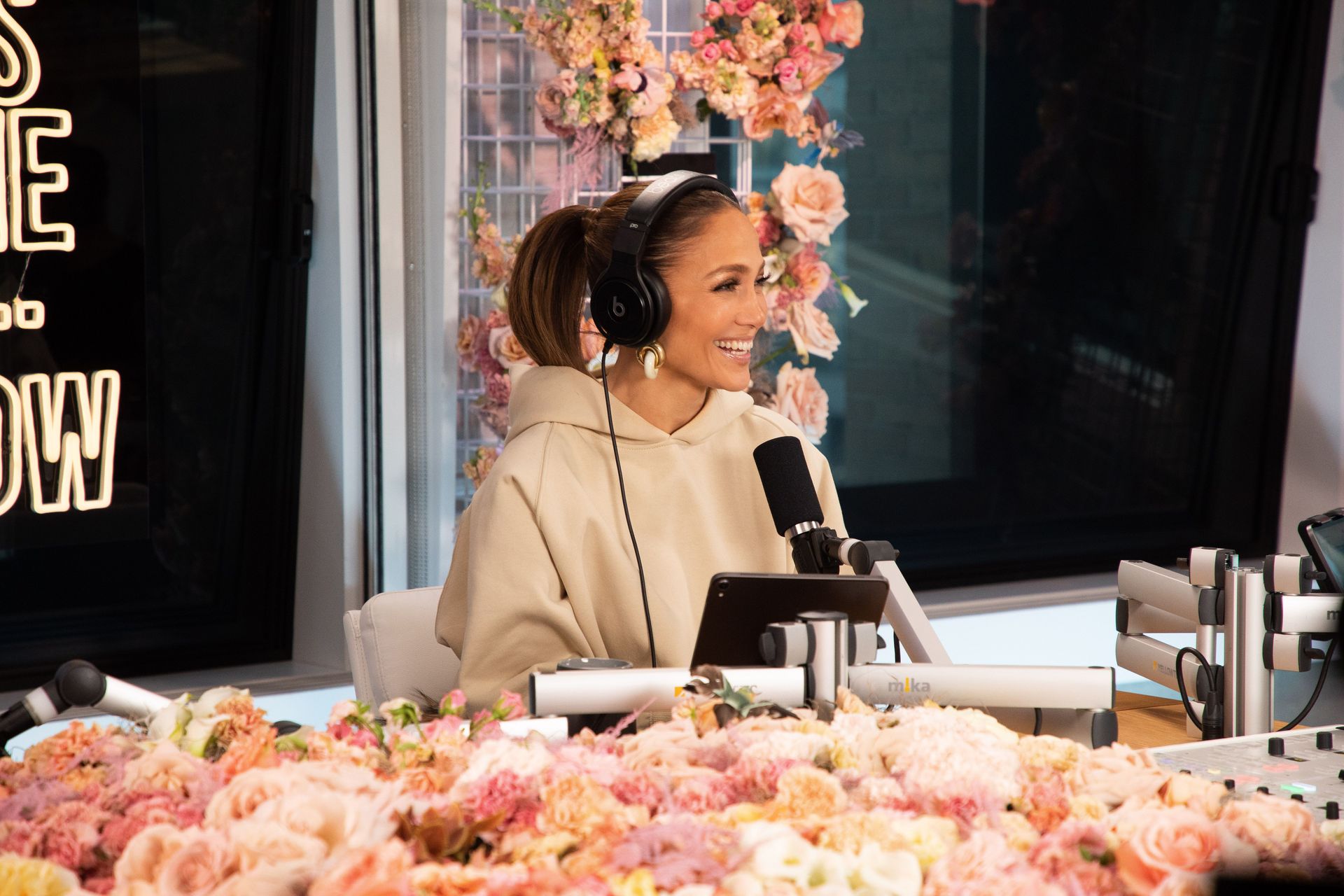
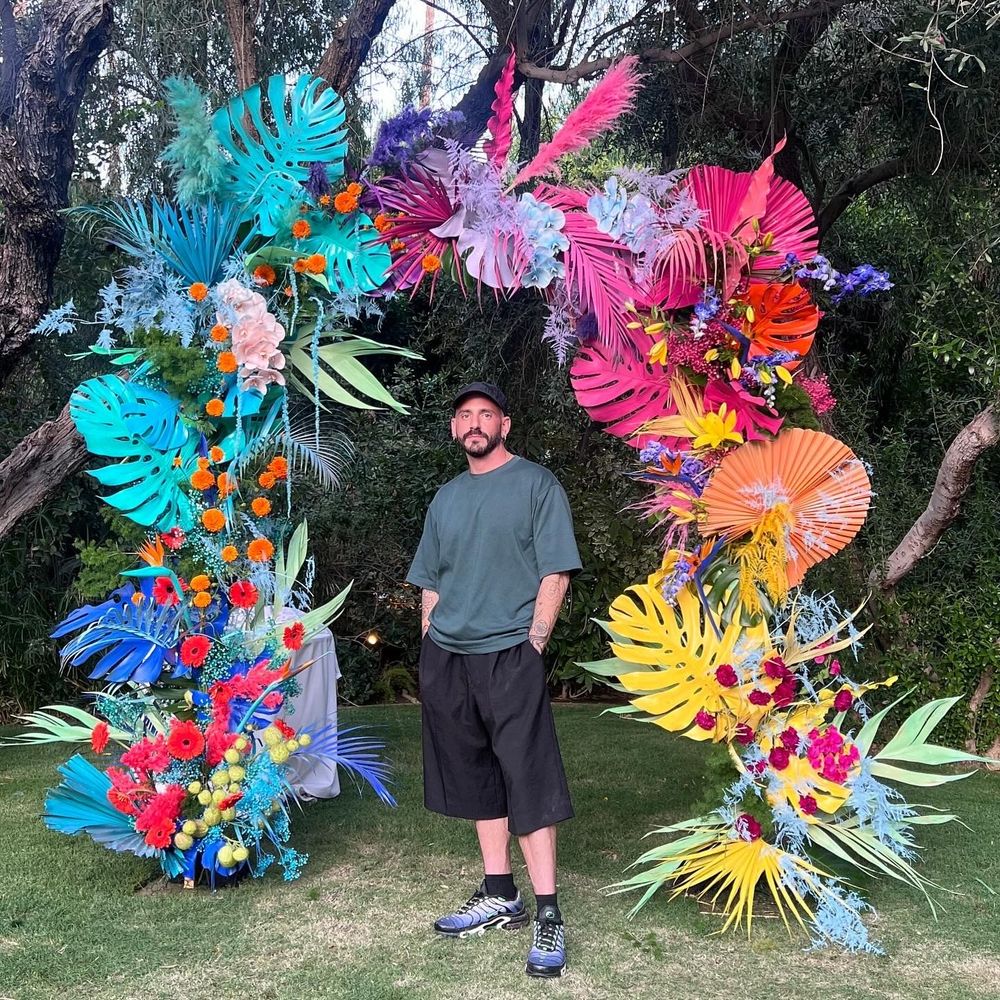
David Litwak: Yeah, I love that the conversation went in this direction. It’s definitely something I can relate to. Well, last question: you’ve mentioned some really cool projects, but what’s the one that sticks out as the most fun you’ve had on a job?
Jake Kale: Give me a second, I’ve got such goldfish brain I literally have to look through my photos and ask, where was I last week? There have been some good ones. Honestly, working with other artists in collaborative ways is the most soul-satisfying for me.
For example, I worked with Nadia Lee Cohen she’s a contemporary photographer and artist, she’s done gallery shows, music videos for Beyoncé, she’s just incredibly talented.
We collaborated twice. Once was for a Salvador Dalí–themed dinner party that was photographed for T Magazine. The other was a big party she hosted for the fashion brand Paris, Texas.
That was at the rooftop of Chateau Marmont. It had a very specific 80s vibe. I got to source vintage vases and base my designs on old Architectural Digest spreads. It was so pinpointed like this, pink is right, but that pink isn’t.
That kind of collaboration where we’re pushing each other, interpreting each other’s worlds, that’s when I find the most joy. Because this job can be solitary unless I’m bringing freelancers on. So when I get to collaborate and make something wholly new, pulling in other viewpoints, that’s where I feel like I shine.
David Litwak: I really appreciate your time, Jake. Thank you so much. Cheers.
Jake Kale: Thanks, David. Bye!!
Need help producing your event?
We built Maxwell Studios to provide full service, vertically integrated creative production, built from inside the very walls where our community has been coming alive since 2021.
CREATIVE DIRECTION
CHEF COLLABORATION
AV PRODUCTION
LOGISTICS
Address: 135 Watts, Floor 1, New York, NY, 10013
Walkable TO Westside Highway, One World Trade Center 9/11 Memorial, Duane Park, Battery Park
Tribeca, Financial District, SoHo, West Village, Greenwich Village, Nolita, Hudson Square
Foquets, Greenwich Hotel, Arlo Soho, The Roxy, Soho Grand, The Frederick Hotel, Warren St Hotel, The Dominick, Hotel Hugo
Paul's Casablanca, Paul's Baby Grand, EAR Inn
The Odeon, Locanda Verde, Forgione, l'abeille, Wolfgang's Steakhouse, Yves, Mr Chows