

In the race to build artificial general intelligence, a truly conscious digital mind, there is still no agreement on what’s missing. Some believe scale alone will get us there. Others insist something more fundamental is required—not just more answers, but a way for machines to revise their beliefs rather than parrot ours. In those conversations, a name from the 18th century keeps popping up: Thomas Bayes.
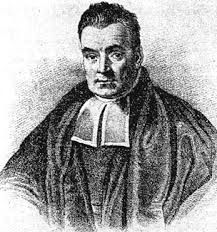
A Bayesian path to Artificial General Intelligence (AGI) is a rather odd possibility. Thomas Bayes lived 300 years ago. He ministered an inconsequential little church in England. Though a man of letters, he only published twice in his lifetime: a tract adding a bit of extra math in defense of Sir Isaac Newton's invention of Calculus, and an essay arguing that God wants his creation to be happy, not just morally upright.
Born in 1701—the year King William III signed the Act of Settlement, consolidating both Protestant succession and constitutional monarchy in Great Britain—Bayes grew up in a family of religious nonconformists. Dissenters, as they were called at the time, were Protestant but opposed the state-controlled Church of England.
Though dissenters were excluded from most official institutions, including universities, their milieu drew from every walk. Ministers like Bayes' father mixed easily with merchants, academics, and even aristocrats. Intellect was not separate from faith for these men and women. Dissenting ministers in particular were often described as men of high academic achievement.
They debated theology with logic, scripture with textual criticism, belief with evidence. To grow up in that world was to learn that the very act of thought was itself a form of devotion.
Around the age of 18, Thomas Bayes matriculated at the University of Edinburgh in Scotland, where—unlike at Cambridge and Oxford—dissenters were welcome. Officially he went there to study divinity, graduating as an ordained minister. Unofficially, mathematics and logic claimed him. A letter from one of his early tutors, John Ward, captures his thinking:
In occupying yourself simultaneously with both mathematics and logic you will more clearly and easily notice what and how much each of these excellent instruments contributes to the directing of thought and sensation.
Today, theology and science are essentially opposed, or at least very separate academic pursuits. But in Bayes’ day, they were one.
Only a generation earlier, Newton had written voluminous treatises on the Book of Daniel and Revelation. At the end of his Principia, after laying out the laws of motion and gravity, he described God as “eternal and infinite, omnipotent and omniscient…and by existing always and everywhere, he constitutes duration and space.”
Newton believed that the laws of physics were very much the mathematical constituents of God Himself—a deeply held conviction that sometimes put him and his academic peers at odds with the state religion.
Specifically, Newton harbored anti-Trinitarian ideas. The doctrine of the Trinity—that God exists as three persons in one—was a cornerstone of the Church. But to many mathematicians of the day, the Church’s insistence that three could equal one just didn’t add up.
Interestingly, one of the few recorded conversations we have from Thomas Bayes’ life concerns this very topic. While Newton had kept his heresy private, the successor to his mathematics chair at Cambridge, William Whiston did not—and was eventually removed from Cambridge for doing so (today, Whiston is more famous for having translated Josephus's Antiquities of the Jews).
According to Whiston’s diary, on an August morning in 1746 he had breakfast with Bayes, who he described as “a dissenting Minister at Tunbridge Wells…and a very good mathematician." Whiston was worried because it had been announced that a Trinitarian creed would be read at a nearby service he was required to attend. If it were, Whiston would feel obliged to walk out. Bayes assured him that such a politically risky move wouldn’t be necessary—pointing out that a similar announcement had been made for a previous date, but the creed had not been read on the appointed day.
Crude though it may have been, the advice Bayes gave Whiston was offered in the form of his life’s work: updating belief based on prior evidence.
To Bayes, statistics was not simply the math that helped gamblers more accurately gauge the odds (how most saw it in his day).
3 Intuitions Behind Bayes’ Theorem
The Monty Hall Problem
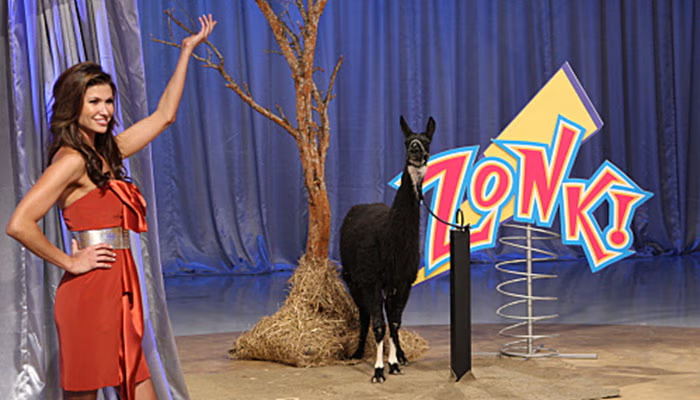
Imagine you’re on a game show with three doors. Behind one is a car; behind the others, goats (the zonk prize in the parlance of Monty Hall's Let's Make a Deal). You choose a door. The host—who knows where the prize is—opens another door to reveal a goat and offers you the chance to switch. Most people assume the odds are now fifty–fifty. But Bayesian reasoning shows something surprising: switching actually doubles your chance of winning. Your first choice had only a one-in-three chance of being correct. When the host reveals a goat, that unused probability shifts to the remaining unopened door, raising your odds to two in three if you switch.
Deadly but Rare
Suppose a test for a rare but frightening disease is accurate 99 times out of 100. A positive result might feel like the end of the world. But Bayesian reasoning insists we include how rare the disease actually is. If only one person in ten thousand has it, most positive results will still come from healthy people. In that case, a positive test may raise your risk—but it may still be far more likely that you are perfectly healthy.
Ghost in the Hall
Imagine hearing footsteps upstairs late at night. At first you think: perhaps it’s a burglar. Then you remember your roommate came home earlier. Your belief shifts instantly. Bayesian reasoning is simply this everyday process made explicit: we begin with an educated guess about the world, then revise it as new information arrives.

Bayes’ theorem is the mathmatics of updating belief, a formula for changing your mind with mathematical rigor.
On the left of this equation is the answer you’re after: the probability P that a hypothesis H is true in light of new evidence E.
On the right is everything that shapes that judgment. Your prior belief—the baseline probabability of H. Then, how well new evidence fits that idea: if H were true, how likely would this evidence E be? Finally, how common the evidence E is in general.
Statistics and probability were epistemology. If God governed the world through fixed laws—the laws of Newton—then reasoning about those laws was a calculus of belief. Even reading scripture required synthesis of biblical evidence with gradations of historical certainty.
Across years of notebook writing, filling journal after journal in his spare hours between sermons and correspondence with fellow members of the Royal Society, Bayes began to formalize the math needed to reason
backwards from effects to causes—a dynamic, rather than fixed, means of analyzing probability. If a new event occurred, how should it update what we believe about its causes?
It was only after Bayes' death that his friend Richard Price went through his notebooks and extracted his final work for publication: An Essay Towards Solving a Problem in the Doctrine of Chances. Bayes had no idea the acclaim his ideas would earn, and certainly would have been unable to conceive of their importance hundreds of years later to the field of artificial intelligence, an area of study he’d likely have considered blasphemous.
Artificial intelligence has not just revived technical questions about computation—it has quietly reopened much older questions about belief itself. On January 20, 2021, President Donald Trump pardoned Anthony Levandowski, a former Google engineer who had been convicted of stealing trade secrets from Uber. But Levandowski is perhaps more famous for founding a church, Way of the Future, and for promoting a neo-pagan doctrine centered on AI superiority.
His church never blossomed. Financial crimes have a way of interrupting messianic movements. But the momentary buzz—including a big writeup in Wired Magazine—was telling. As is the religious fervor of people like Peter Thiel. Even the U.S. Conference of Catholic Bishops has built its own large language model, aptly named Magisterium.
Rabbi Sherwin Wine, the famously atheistic founder of Humanistic Judaism, once said, “I’ve always said there is no God. I never said there wouldn’t be one in the future.” That quip now seems prophetic.
Today our AIs answer our questions before we ask them. Young people consult LLMs the way parishioners once did priests. They confess anxieties and shames to chatbots. They seek guidance and advice from algorithmic oracles.
According to Magisterium, “Bayes’ theorem aids in refining inductive reasoning, yet ultimate certitude in metaphysical demonstrations (e.g., God’s existence) relies on demonstrative syllogisms, not mere probability.”
A Catholic AI may demand deductive certainty in any proof of God’s existence. But in building an LLM, the Church has aligned itself with a technological trajectory that quietly undermines its own epistemology.
It is probabilistic induction that likely offers a path to the promised land of artificial general intelligence. Bayes’ theorem describes how to update probabilities in light of new evidence. It sounds trivial. It is not.
A Bayesian Path to Artificial General Intelligence
Bayesian Experimental Design
Today’s language models answer confidently, even when they lack the information needed to do so. Bayesian experimental design points toward a different kind of intelligence—one that knows what it does not know. Instead of simply responding, the system asks: what observation would reduce my uncertainty the most? An AI built this way could decide what experiment to run, what data to collect, or what question to ask next—actively gathering evidence in order to improve its understanding of the world.
Bayesian Optimization
Large language models generate responses one token at a time, which makes them surprisingly weak at problems that require long-term planning. Bayesian optimization, by contrast, allows a system to navigate enormous spaces of possible solutions. By maintaining probabilities over which regions of that space look most promising, an AI can gradually steer its search toward better outcomes. This ability to explore, evaluate, and refine decisions over many steps could prove essential for machines that must plan, invent, or design—core capabilities of more general intelligence.
Probabilistic Reasoning and Belief Updating
Human reasoning rarely deals in certainties. We constantly revise our beliefs as new information arrives. Bayesian reasoning gives machines a similar flexibility: instead of committing to a single answer, an AI can maintain degrees of belief across many possible explanations and update them as evidence accumulates. This ability to hold competing hypotheses and refine them over time is a hallmark of human scientific reasoning—one many researchers believe will be essential for machines to truly understand the world.
Because Bayesian math formalizes the rules for this kind of updating, it can be applied to complex processes. Bayesian methods are a key next step as scientists attempt to move LLMs beyond simple “next token” prediction. Everyone from Google DeepMind researchers to academics at Harvard University, Princeton University, and Cornell University has returned, in one form or another, to Bayesian ideas—whether in Experimental Design, Optimization, or the simple but profound logic of Belief Updating.
Provocatively, there’s an emerging consensus that human intelligence has a lot of Bayes under the hood. Researchers like Anil Seth argue that our perceptions are not simply passive recordings of the outside world, but are instead based on a form of Bayesian prediction. The brain generates hypotheses about the world and corrects them through incoming sensory data in a process that’s analogous to Bayesian reasoning. You can experience this yourself. Optical illusions occur when prior expectations overwhelm your brain’s ability to error-correct with incoming sensory evidence.
Thomas Bayes died in 1761, unmarried, living quietly in Tunbridge Wells. He left money to family and to fellow dissenting ministers. He left a gold watch to the daughter of his lodging house owner. And he left his notebooks.
Through them, he had set out to better know God, to reason carefully about belief and divine order. In so doing, he discovered the general mathematics of learning under uncertainty.
In trying to understand how a mind might reason toward the divine, Thomas Bayes unintentionally discovered how a mind works and how one might be built by human hands.