

For many people outside Africa, Rwanda remains frozen in 1994 when the genocide against the Tutsi left over a million dead. The Rwanda that exists today is something else entirely; it is often described as the “Rwandan Miracle.” Over the past three decades, GDP has grown rapidly, Kigali is increasingly positioned as a center of technology and investment, and women now hold a majority of seats in parliament—the highest share in the world.
Much of this is credited to the country’s unique history, shaped by a relative absence of linguistic and ethnic fragmentation—the Hutu-Tutsi distinction had been a shallow one until its codification by colonial powers. Credit, of course, also goes to the widely hailed, and perhaps unrivaled success of the country’s reconciliation project—which most who study it see as a model for the world.
While some in the west have criticized aspects of the countries political system or leadership, Rwandans themselves often see those criticisms as problematic, coming from former colonial governments, as they do, or from individuals who simply don’t understand the reality on the ground. Rwanda is a country rebuilding itself on its own terms—sometimes in ways that can be difficult to read from the outside.
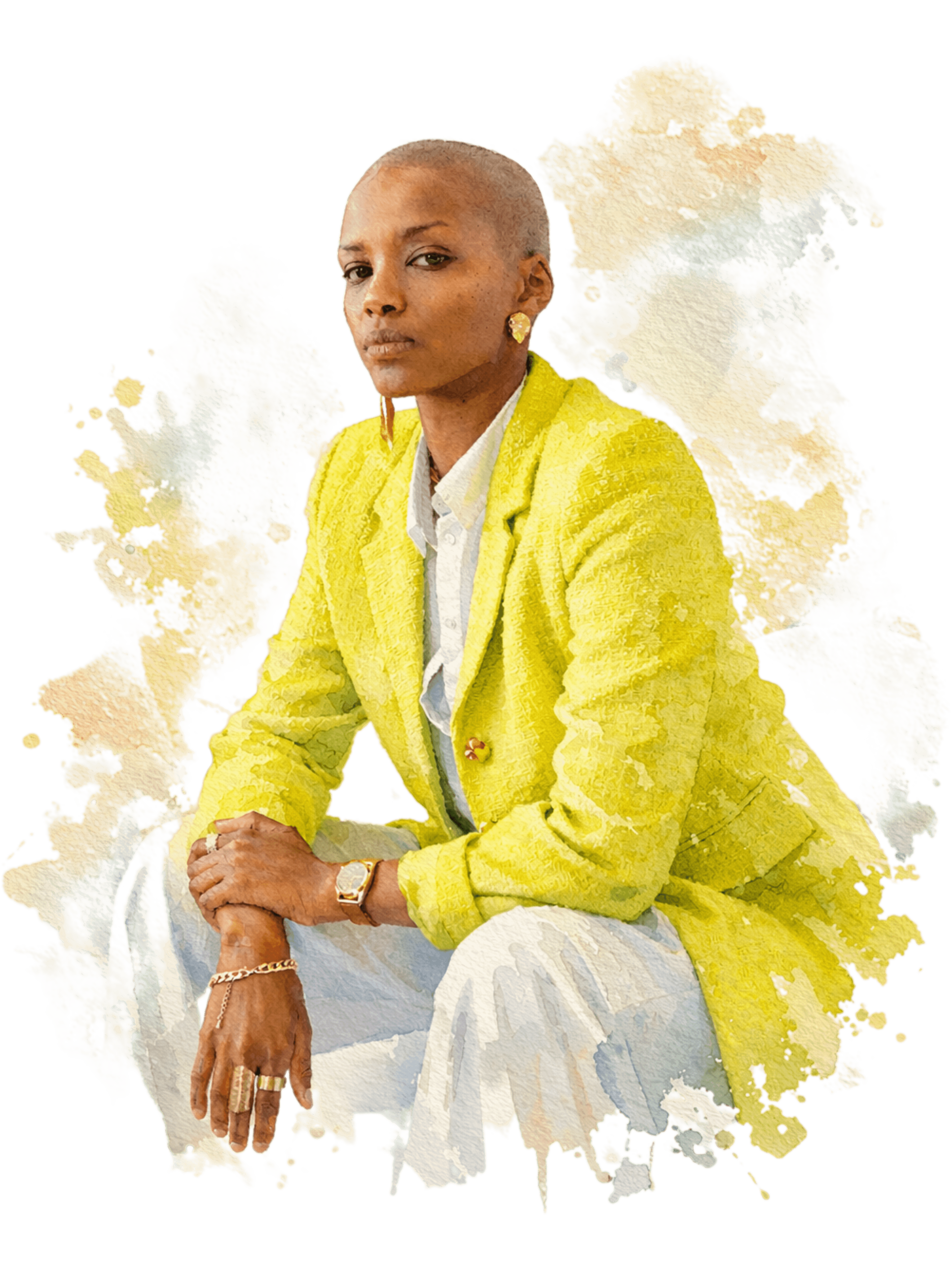
For Yseult P. Mukantabana, a Rwandan writer, advocate, and filmmaker who grew up between Burundi, Belgium, and the United States, her country’s transformation is not abstract but something she has lived. Raised in a family shaped by exile, openly gay, and Jewish, she moves between identities and geographies with unusual clarity. In her own words, she reflects on her relationship to Rwanda’s recovery—conveying the lessons its story might hold for a world struggling with so many of its own fractures.
Growing Up in Exile
I was born in Burundi, which is a neighboring country to Rwanda. The two countries are very similar—the languages are almost the same, and historically there have been similar demographic conversations between the Hutu, Tutsi, and Twa communities. I was born in 1987, and my mother and father were born there as well, because both sides of my family had fled Rwanda in 1959. I’m the third generation born in exile. Even though we are Rwandan, our family history unfolded in Burundi.
When I was five years old we moved to Belgium, to Brussels. I lived there for four years and then we moved to Texas for two years while my dad was in school. After that we went back to Belgium again. Later, when I was twenty, our parents moved us to Princeton, New Jersey, and I’ve been on the East Coast since around 2008.
When people live through exile like that, family becomes something complicated. You lose people because of violence, and then people scatter all over the world and there’s an unspoken weight of grief for all the loss, for a family dynamic that could have been but isn’t.
Because of that, many of the people I grew up calling my aunts or cousins were not my blood relatives. They were friends of my mother who had gone through similar experiences—people who had grown up together in exile and created their own communities because that was what they had left.
That’s how I learned to build my own communities and made a promise to stay in touch. It’s not easy, but I envied those that knew each other since kindergarten and I wanted that for myself too. I’m really good at staying in touch now, with friends all over the world.
Judaism and Exile
The Jewish people also have a story of exile. Generations spread across the world, across continents and cultures, yet still holding on to a deep sense of being one people.
When I converted to Judaism, it didn’t feel like I was becoming something completely different. It felt natural, almost like I was stepping into something that already made sense to me—like adding another layer to my identity, not replacing anything that was already there.
I think what resonated with me is that sense of continuity, of belonging that exists even in dispersion. The idea that a people can be scattered across the world and still remain connected—not just in belief, but in memory, in practice, in how they see themselves.
Coming from Rwanda, where the idea of being one people has had to be reclaimed and protected, that sense of collective identity, even across distance or difference, felt very real to me. It didn’t need too much explanation. It just felt understood.
Returning Home Is a Blessing
Every time I go back to Rwanda, it feels like a blessing. It’s something I don’t take lightly. My grandmother fled the country in 1959, and she never got to see Rwanda the way it exists today. That stays with me. It puts things into perspective in a very real way.
So when I return, I feel an immense sense of privilege. I’m stepping into a country that people fought to rebuild, made the decision to go back home and create something again, even in the immediate aftermath of so much loss when there were still bodies on the ground.
That level of commitment, of belief in a future, is something I carry with me every time I’m there. It makes my experience feel layered. On one hand, there is joy, connection, a sense of belonging. On the other, there is an awareness of everything that had to happen for me to be able to feel that way. Every time I go back, I feel grateful. Truly.
Choosing Not to Take Revenge
After the genocide and multiple forced exiles—and after the international community, even with clear information of what was happening, looked away—the leadership that came into power stopped the massacres. It could have reacted in a vengeful way. It could have become an eye-for-an-eye situation.
But it didn’t. And the country chose to rise above that and move forward as one people. By making that decision, we avoided what could have been a catastrophic situation—an ongoing cycle of violence and pain that might have lasted for generations. My admiration and respect comes from that decisive move, which made it possible for Rwandans to just be—to heal, grow, and thrive.
Community as a Civic Practice
We have something called Umuganda, which happens once a month. It comes from a traditional practice and has been incorporated into public policy. People gather in their neighborhoods and work together to clean public spaces. They clean streets, plant flowers, and improve the places where they live.
But it’s not only about cleaning. It’s also a moment where communities gather and talk about what is happening in their neighborhood and how to improve it. For example, if a school is struggling, the community might organize support or create a small fund to help. When people contribute to improving their neighborhoods, they feel responsible for the country.
Being Gay in Rwanda
I’m often asked what it’s like to be gay in Rwanda. When the question comes from other queer people, I understand it—there’s a real need to know where it is safe to exist, because the world can be cruel to queer people. There is a specific lens through which Rwanda—and many countries on the African continent—are viewed, one that can be rooted in ignorance and, at times, racism.
Homophobia exists everywhere; the difference often lies in how laws, civic norms, and social environments are structured so that people do not feel comfortable acting on harmful beliefs about others. In Rwanda, discrimination, violence, or harm against someone because of who they are is illegal. This is deeply tied to the country’s history and what it has experienced.
Same-sex marriage is not legal yet, but Rwanda is one of the few countries on the continent where homosexuality itself is not illegal. Protections tend to operate more through broader norms than through explicit laws, and the country has at times supported international efforts to protect LGBTQ people from violence and discrimination.
My personal experience has been—I am out and have never been bothered. I have traveled deep into the country, stayed in remote resorts with partners, and have always been treated with kindness and respect. I am openly gay in public and have been invited into meaningful conversations. I feel incredibly lucky and grateful to be able to be myself and to feel safe in my homeland.
Generational Grief
My wife and I have written a film together, which we are now producing, called The Heights of Kigali. At its core, the story is about grief—how it lives in us, how it moves through us, and how it can shape the choices we make, even when we think we have moved past it.
It follows two women who want to have a child, but the idea of bringing a child into the world forces them to confront something much deeper. They begin to face the grief they have inherited, grief shaped by generations of exile and by the loss of family members across time.
Each of them responds to that grief differently. One turns toward community, building connections and surrounding herself with people. The other turns inward, focusing on her career and financial stability, trying to build a kind of security that feels dependable and controlled.
This film is also about how grief evolves across generations. There is a difference between those who experienced it directly and those who were born into the aftermath—into a world that was rebuilt for them, but still carries the imprint of what came before.
That inheritance is complex. It can be invisible, but it is deeply felt. We wanted to explore that space—the tension between survival and living, between what is passed down and what is chosen, and what it means to create something new while still holding the weight of what came before.