

The second time around, Mad Men shifts. It steps into a new light, more seductive but also more complex, darker but also brighter. It was already a throwback when it aired—nostalgia for the early 1960s, for the gray-flannel confidence of American capitalism, for a time when a man could smoke through a meeting and still be treated like the smartest person in the room. Now, living through the most chaotic timeline of late-stage capitalism, we long for the time when Mad Men itself dominated the cultural conversation, when prestige television still felt like an event instead of just another clickable title on an endless streaming menu. But the bigger change is emotional. The first time around, it was easy and fun getting seduced by the glass offices, the sunken living rooms, the clink of ice in a tumbler, the curl of smoke off a woman’s lip. Now? Well, it’s complicated.
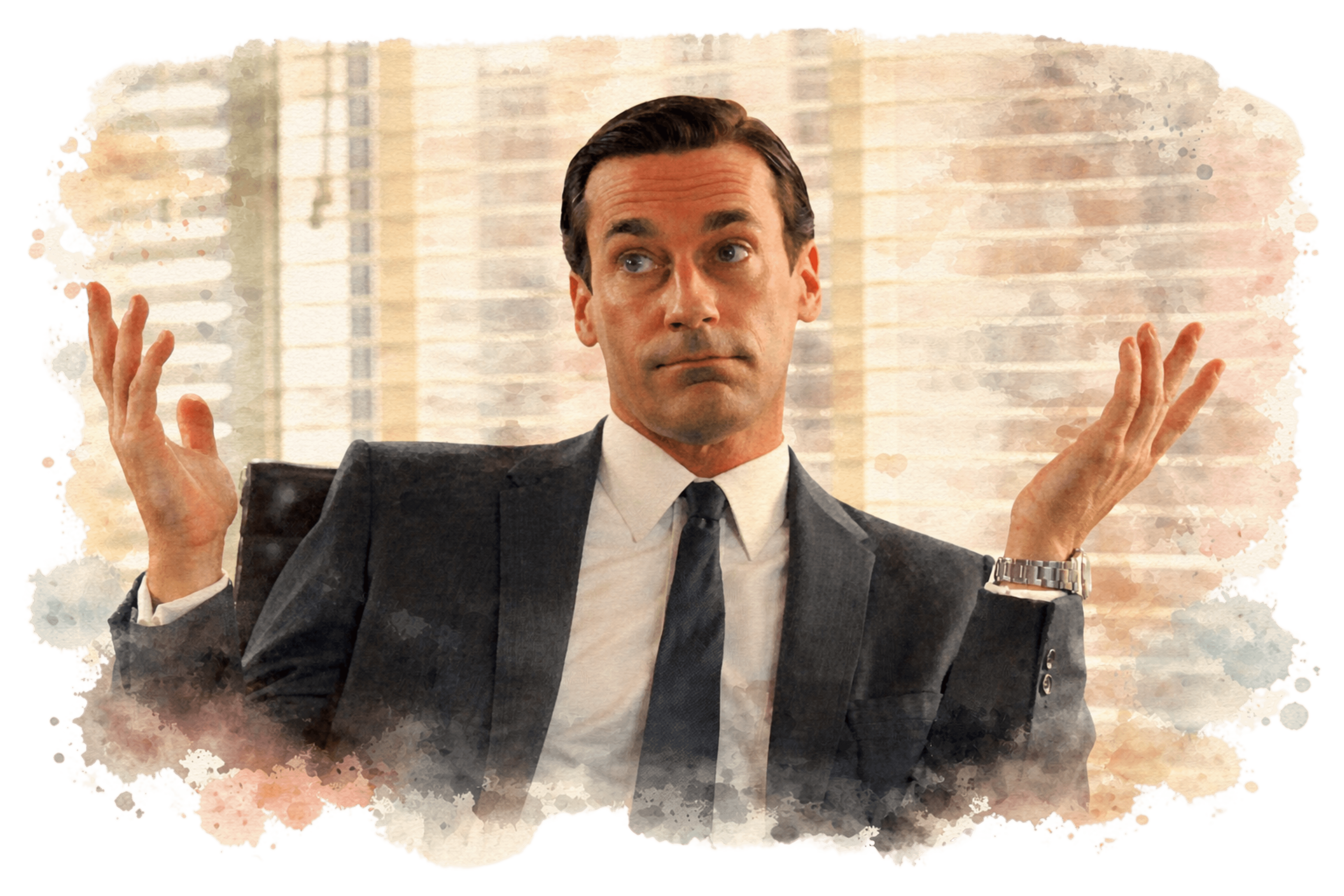
Mad Men has always been a bright star in my life, aligned as it was with my career beginnings in advertising, the heavy smoking and nascent stages of mild alcoholism that made up the constellation of my twenties. I aspired to live a Don Draper lifestyle, from the after-work (and during-work) happy hours to the client entertaining. I had more martinis than my liver now would ever be able to filter, stumbled into agencies the next morning in sunglasses, and generally believed that charisma plus an emotionally resonant pitch could solve most problems. And for the most part, it did. I even once won an agency-wide Mad Men costume contest with my very messy portrayal of Joan (so sorry, Christina Hendricks). To me, the series felt less like fiction and more like cinéma vérité, only with better lighting and fewer iPhones.
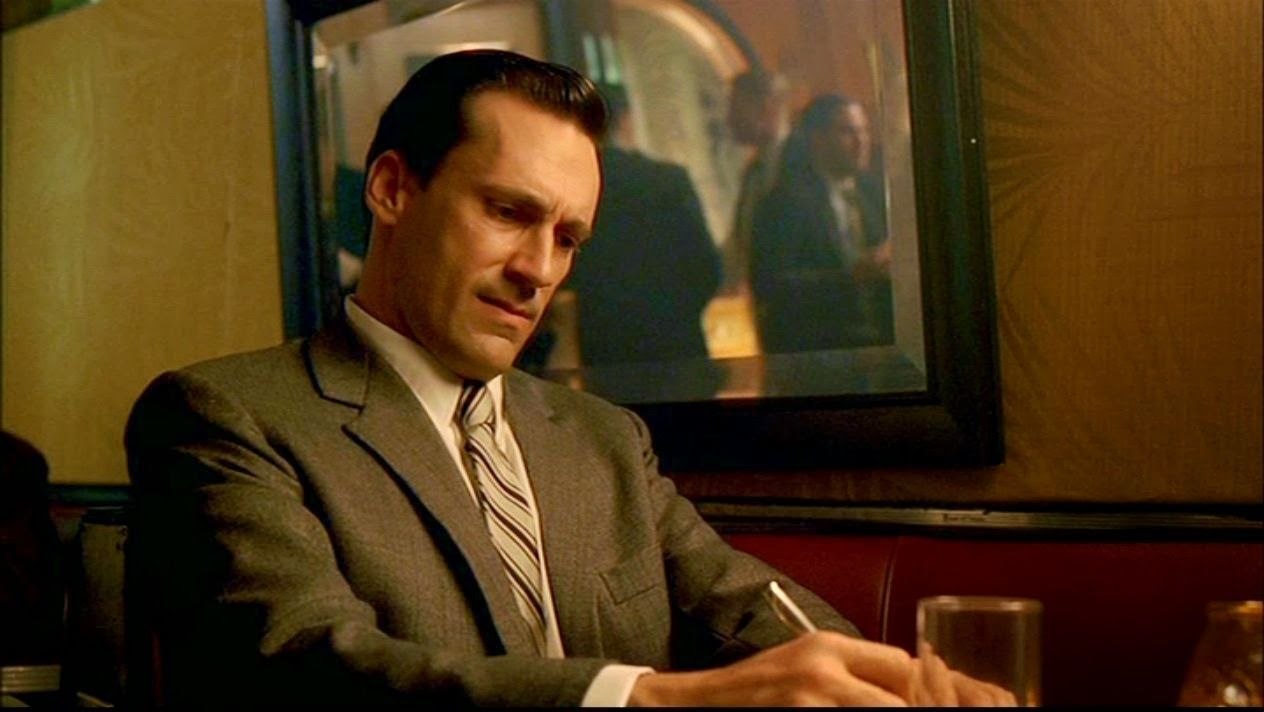
Cultural historian Thomas Crow once described a society’s avant-garde as the research and development department for consumer capitalism. Mad Men understands this instinctively. Bohemia, rebellion, the invention and then reinvention of youth culture—they’re constantly roiling under the surface. New worlds for Don to explore, to assimilate. What’s even clearer the second time around is the way these dynamics appear first as threats to the advertising world—to the clients that pay the agency’s bills—and then quickly, almost immediately, get transformed into material to be mined and repackaged. As the show grinds forward, the optimism drains. The characters still talk about opportunity and success, but the machinery of the business begins revealing what it actually runs on.
Mad Men's first season begins with Don Draper alone at a bar, watching people drink and flirt while he studies them like specimens. He’s trying to solve a problem for a cigarette campaign. What he’s really doing is figuring out how people narrate their own lives to themselves, so he in turn can weaponize them to his advantage. He understands desire, nostalgia, and the little f ictions people tell themselves about who they are—just like the industry. Just like capitalism. Just like America. The pilot throws you headfirst into this Mad, Mad world: the casual racism, the sexism, the endless cigarettes, the swaggering confidence of men who think they understand everything about how America works. Rewatching it now, it feels a little rough around the edges—the show won't find its rhythm or budget for a little while—but the Draper mythology is already functioning.
And the show is blindingly white. Don, Peggy, Betty, Roger, Pete, Ken—everyone seems to have the same blue eyes and tailored suit. It’s a world of cocktail parties and corporate boardrooms where the same kind of person keeps hiring the same kind of person to sell America back to itself.
Peggy begins the series as fresh meat—lobster meat, according to her future confidante Ken Cosgrove. What makes her interesting isn’t that she’s secretly brilliant; it’s that she’s observant. Peggy watches the way the men behave, the way they talk about women, the way they talk about consumers, and slowly starts realizing that the people selling products don’t actually understand the people buying them.
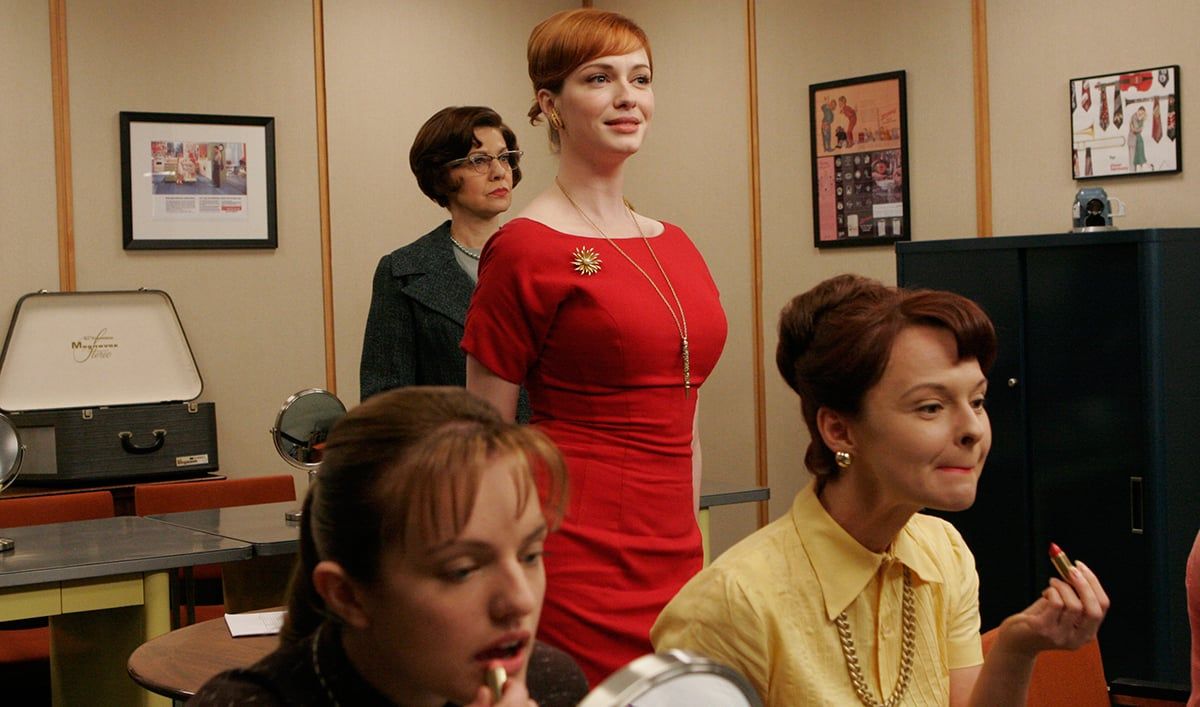
Her insight comes into focus during the Belle Jolie lipstick focus group. The male executives sit behind a one-way mirror watching a room full of women test lipsticks and chatter among themselves. To the men it looks chaotic and pointless. Peggy immediately understands what’s happening: the women aren’t really talking about lipstick at all. They’re talking about identity—who they are, who they want to be, and how a small totem might help them transform into that version of themselves. That moment becomes the blueprint for Peggy’s career. While Don sells grand emotional myths, Peggy pays attention to the quieter truths about how people actually live. She gains confidence in her creative voice, stepping into the vacuum Don and Freddy leave behind.
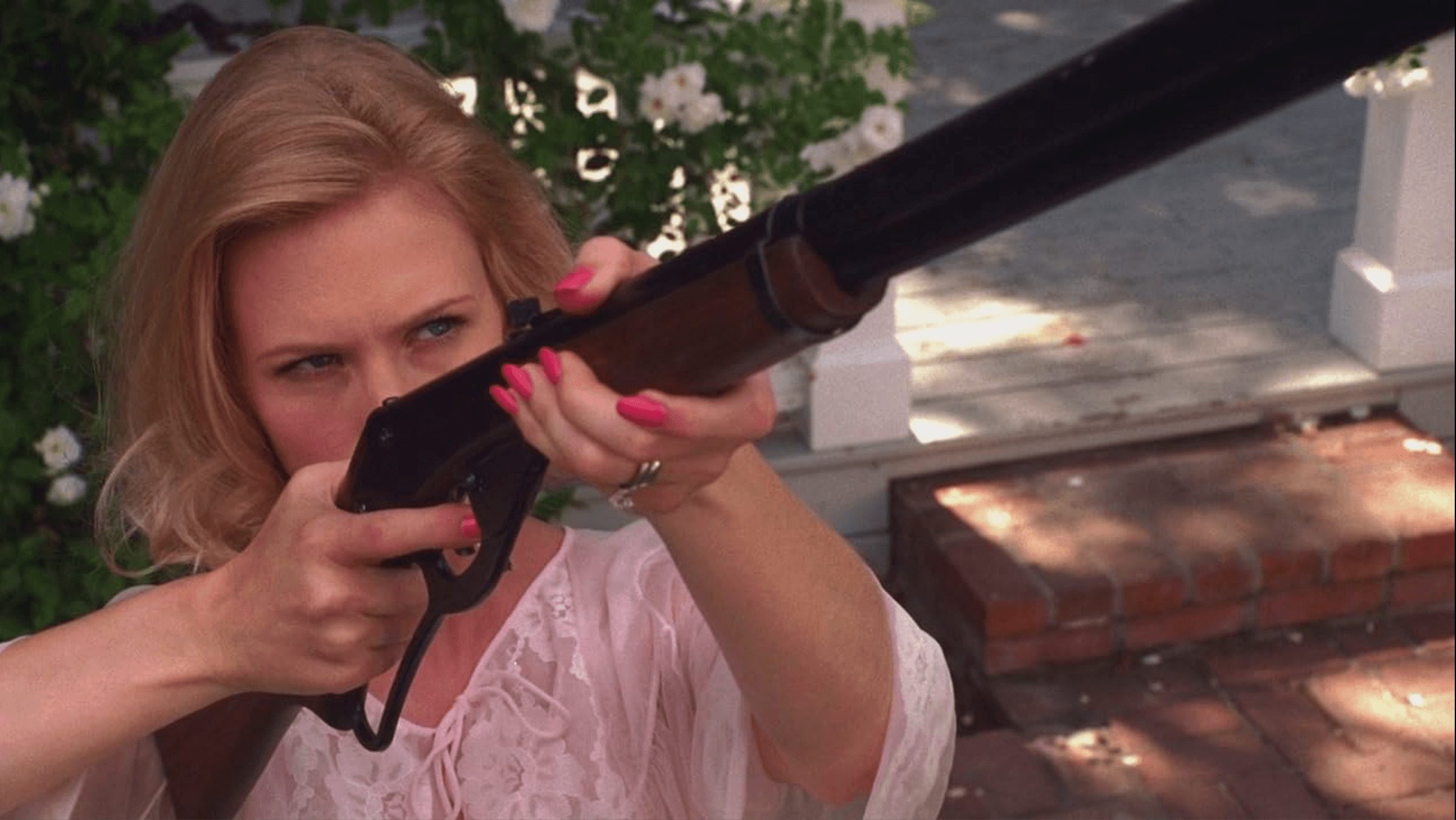
Betty Draper—the literal personification of a trophy wife to Don's All-American alpha male— briefly returns to the workforce as a model. For a moment she seems animated again, like someone remembering what it felt like to have her own life. When that opportunity evaporates, she walks into her backyard and calmly shoots the neighbor’s pet pigeons with a BB gun. It’s such a bizarre, almost theatrical moment of suburban rage that it lingers long after the episode ends.
Rewatching it now, it feels less like madness and more like the only agency she has left. January Jones plays Betty with a porcelain stillness that initially reads as emptiness but gradually reveals itself as repression. Betty is intelligent, observant, and trapped inside a role that offers almost no outlet for either quality. Her life is built around maintaining the illusion of domestic perfection while the men around her pursue ambition, infidelity, and reinvention. She speaks Italian, for God's sake.
The early seasons of Mad Men still live inside the tidy mid-century geometry of early-sixties America—tailored suits, obligatory marriage, the illusion of control. But as the show moves deeper into its run, the angles become more abstruse. If Don Draper represents the fantasy of American freedom, Betty represents the cost.
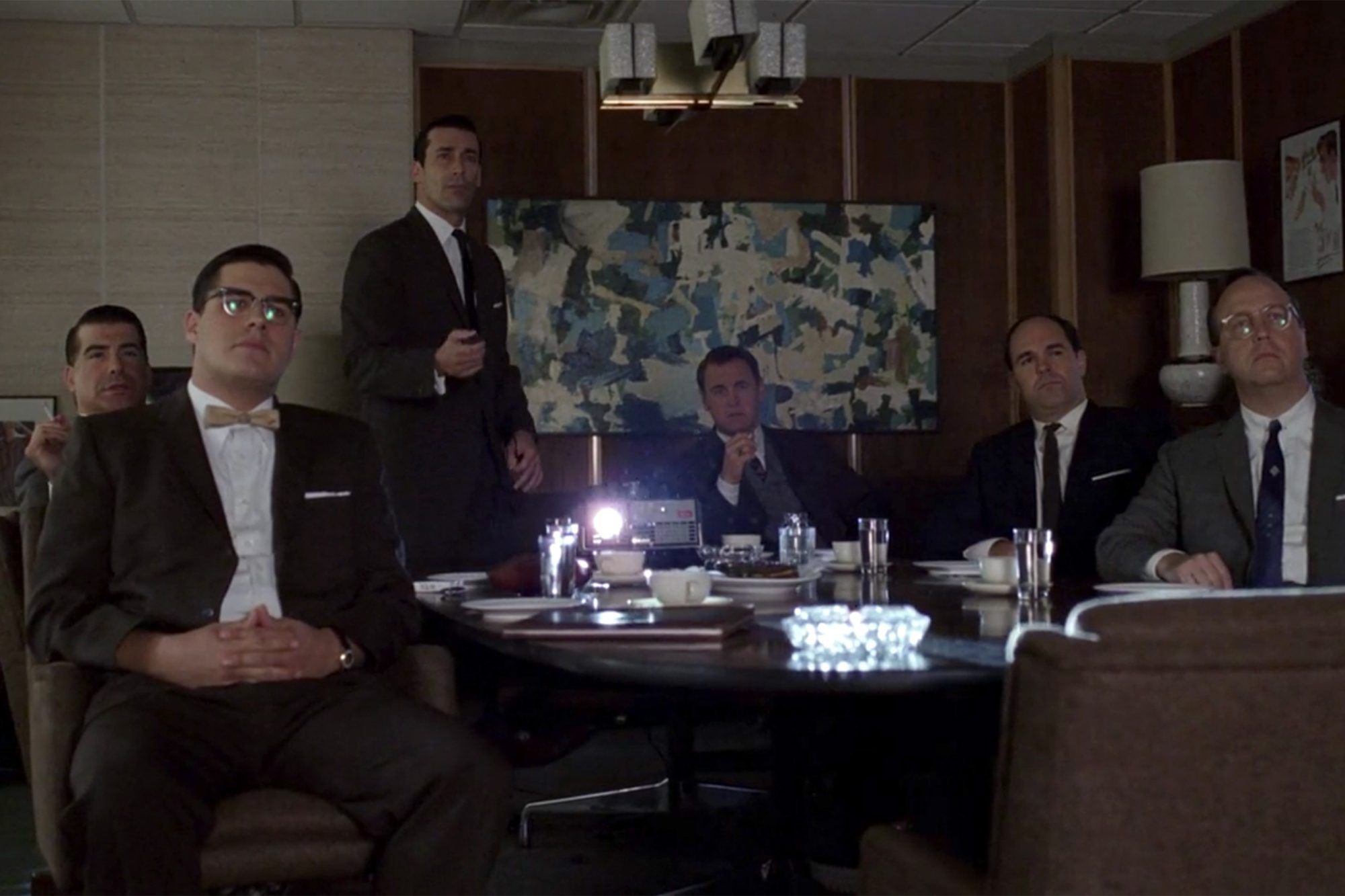
Don’s pitch for the Kodak slide projector, which he cleverly renames "The Carousel,” is a work of art in its own right. Draper stands before the room and explains that nostalgia is “a twinge in your heart far more powerful than memory alone,” while clicking through slides of the smiling suburban family he’s actively neglecting. The whole boardroom of stiff shirts melts into an emotional puddle, swirling into the emotional void that is Jon Hamm's Don Draper. Unadulterated advertising alchemy. That Don is selling an image of domestic bliss while his actual home life is disintegrating in real time is heavy-handed but effective in encapsulating Mad Men's charm.
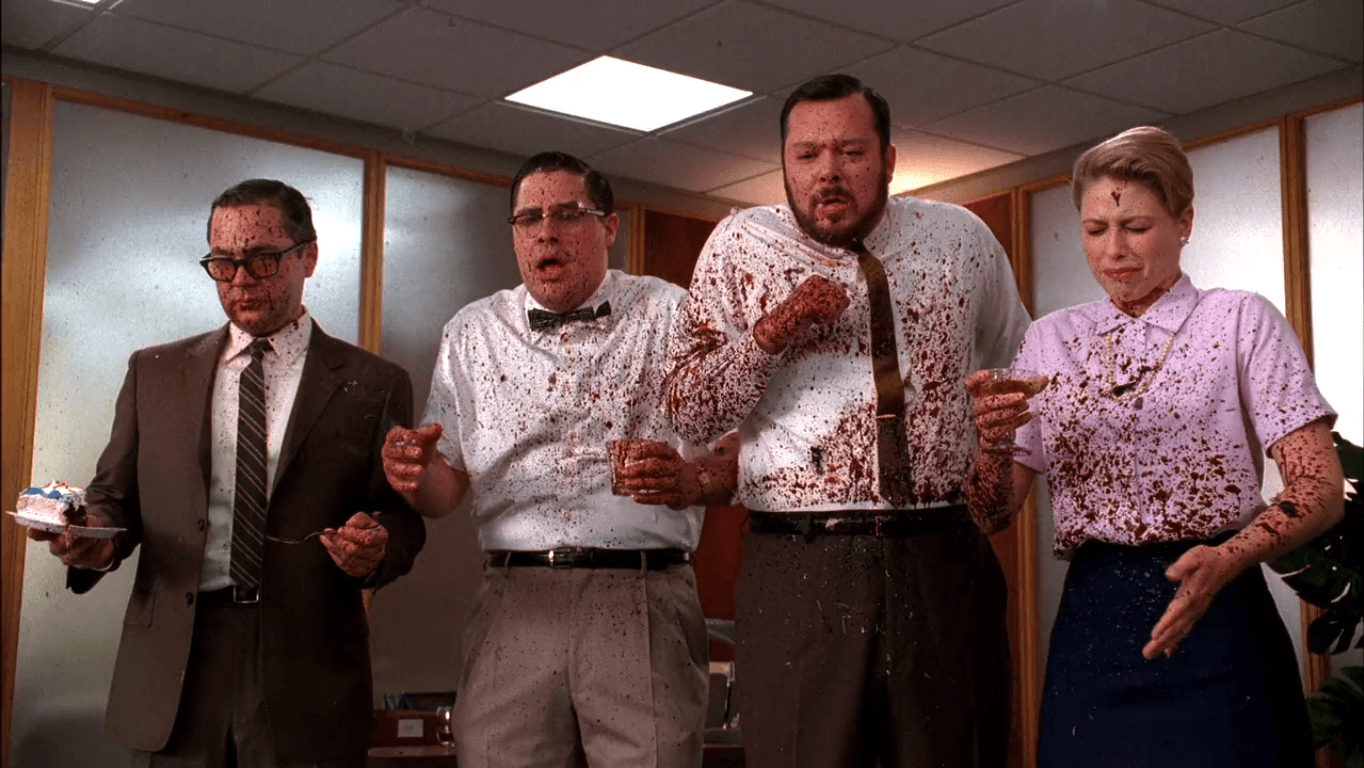
Sterling Cooper, having been bought by a British conglomerate, gets reorganized, with the OG colonialists treating the Americans like interchangeable parts in a corporate machine. During Joan's good-bye soiree, inept secretary Lois drives a lawnmower across the floor, running over the foot of one of the new British executives, and turning the carpet into a Jackson Pollock of blood and panic. The moment is shocking, grotesque, and darkly hilarious—the tone Mad Men handles better than almost any show. The real punchline comes afterward: the agency absorbs the catastrophe and moves on almost immediately. The machine eats one of its own, and keeps running.
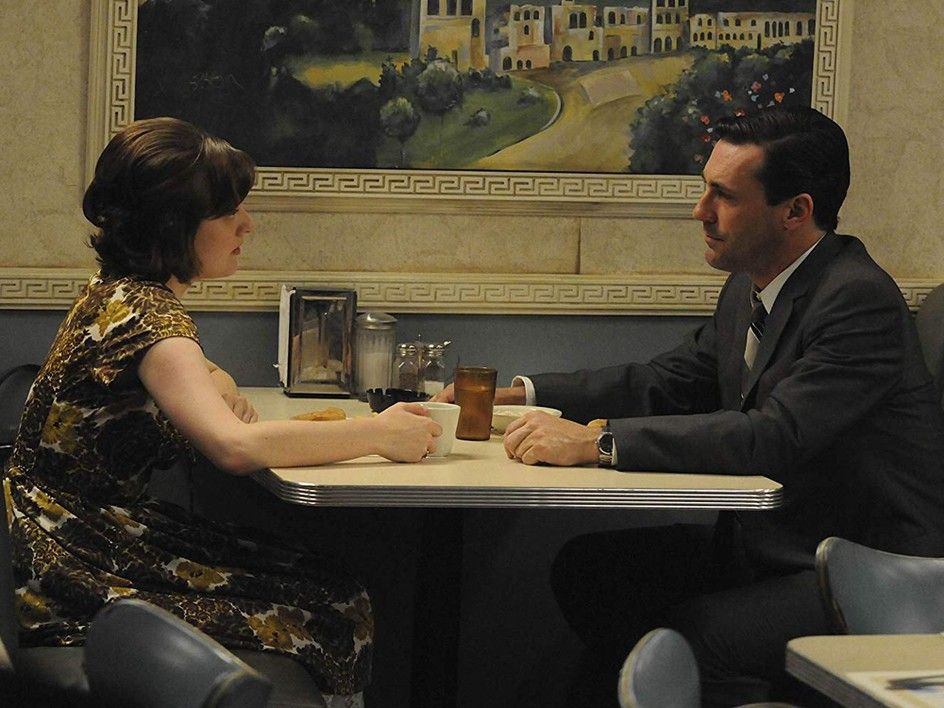
Don and Peggy stay late at the office working on a Samsonite campaign while the rest of the city goes home. What starts as a routine overnight work session gradually becomes something closer to emotional trench warfare. They drink, argue, insult each other, and finally collapse into something resembling honesty. At the same time Don learns that Anna Draper—the one person who knew Dick Whitman and loved him anyway— has died. The episode strips the show down to its essentials: the man who built the myth and the woman quietly learning how to surpass him.
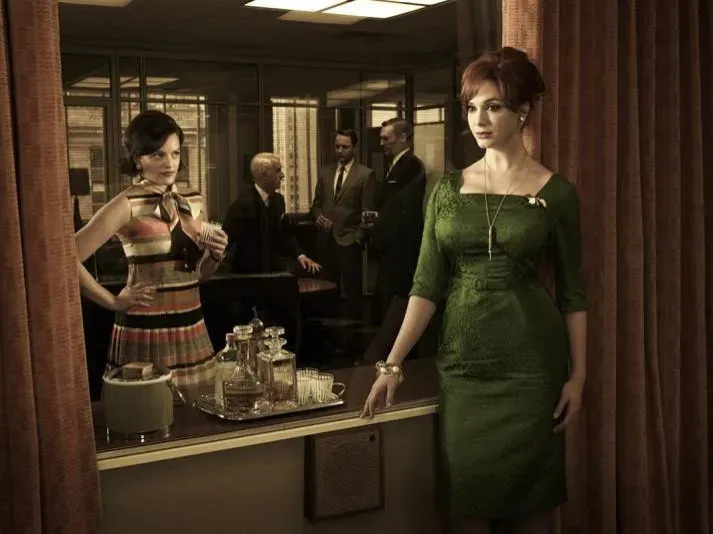
The Jaguar storyline makes the logic of the entire system painfully literal. Joan is asked to sleep with a sleazy car dealer in exchange for securing their first automobile account and earning a partnership stake in the firm. The partners debate it with the language they use for everything— strategy, leverage, opportunity. Everyone understands exactly what is happening and proceeds anyway. It’s one of the bleakest moments in the show because the machinery of business renders even something that ugly rational. Joan's tension--gaining money, career and independence at the loss of some of her dignity and confirmation of what other people see instead of her abilities and talent--is magnificent.
What Mad Men understood better than almost any show of its era is that American capitalism runs on storytelling. Products are incidental. That was true in the 1960s, had become more true in the 2000s; and now? Commerce drives the algorithm that controls our lives. Advertising no longer lives primarily in magazines and television commercials. It lives inside our phones, our feeds. It lives in our heads. Tangential to that idea, everyone is now, in some sense, a brand manager of their own identity. Just as Don was throughout the series—throwing money at problems, thinking people are disposable, moving on before consequences have time to catch up with him.
By the final season the country has changed, the agency has fallen into the corporate chasm it once tried to climb out of, and Don Draper—who spent the entire series running from himself— has hit the end of his road. Literally.
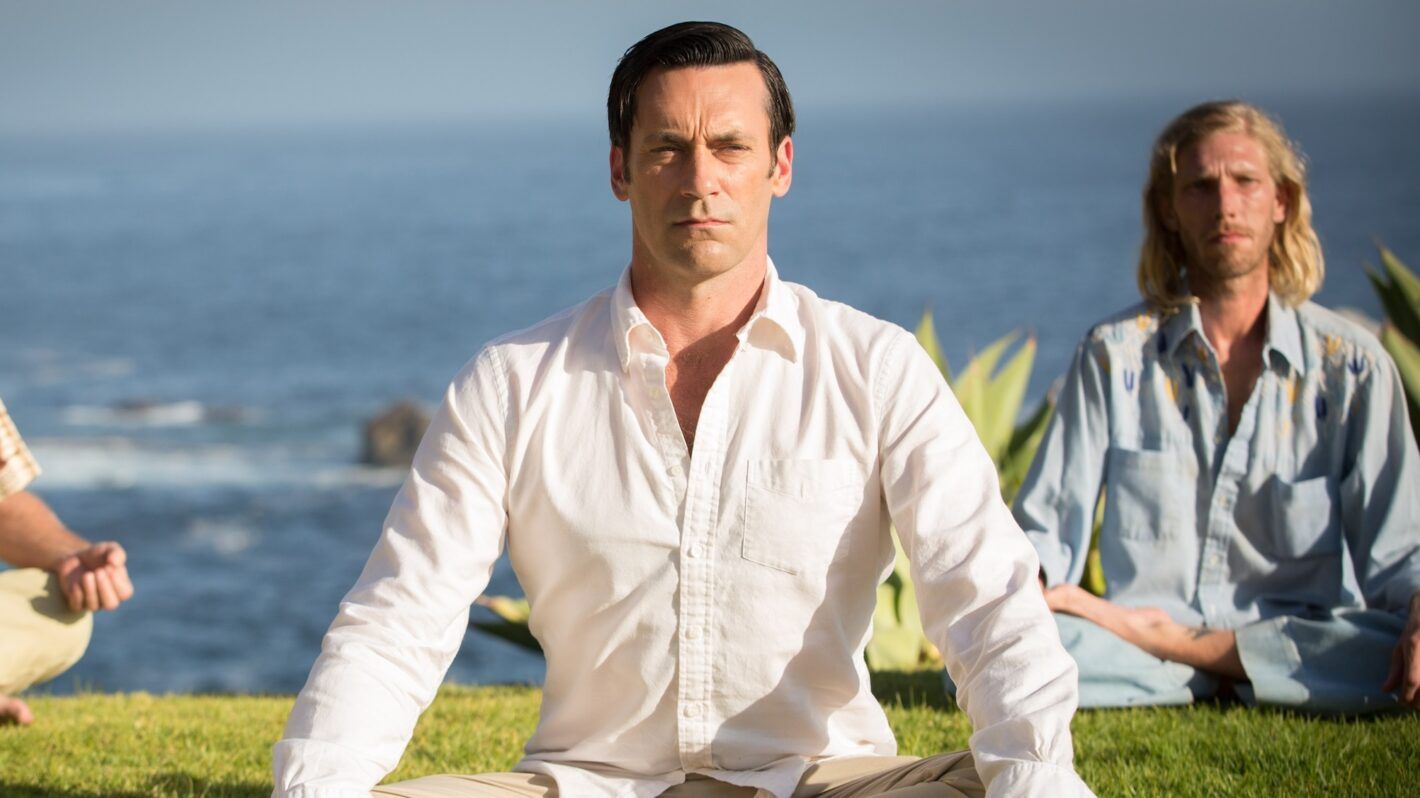
He drifts west, his own Babylon, gets beat up by some small town army vets who, without quite figuring it all out, see through his layers of façade. And then ends up at a California retreat where people are trying to meditate their way into enlightenment while perched on cliffs overlooking the Pacific Ocean.
Don’s on a precipice, teetering. The agency back in New York has just about written him off. He’s just about written himself off. And so have we. Suddenly, for once, he looks tranquil, like a man who has stepped outside the machinery of ambition and performance that has defined his life.
And then it happens. The Coke commercial literally heard 'round the world.
Don has packaged up the zen vibes of the retreat into the most famous piece of advertising in history. Coke was the carrot dangled in front of him since the start of the show over a decade ago. It cements Don as the creative genius he aspired to be, as well as the vessel for capitalism that prevents him from ever changing. He’s the same suave hobo we met in that smoky bar, still a loner in a crowd, trying to feed them the reflection they want to consume.