
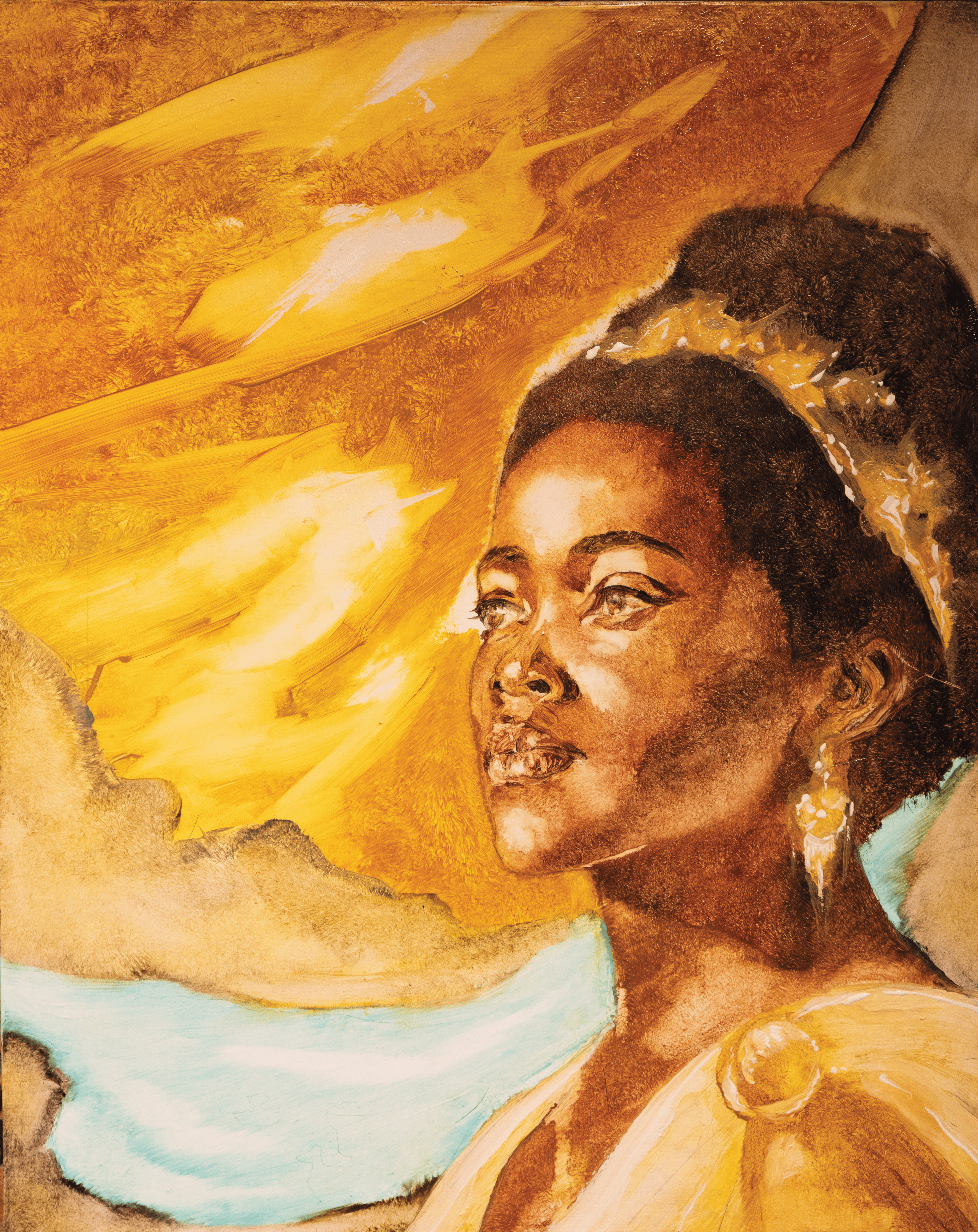
"Don’t think you’re the most beautiful girl in the world,” Janelle Commissiong’s unnamed pageant chaperone said to her a few seconds after Commissiong made history as the first black (Trinidadian) Miss Universe in 1977. Her response? “The organization you work for told me I was.” After a slew of accusations calling her crown a civil rights appeasement to the black community, the media refused to accept Commissiong as anything more than a political move.
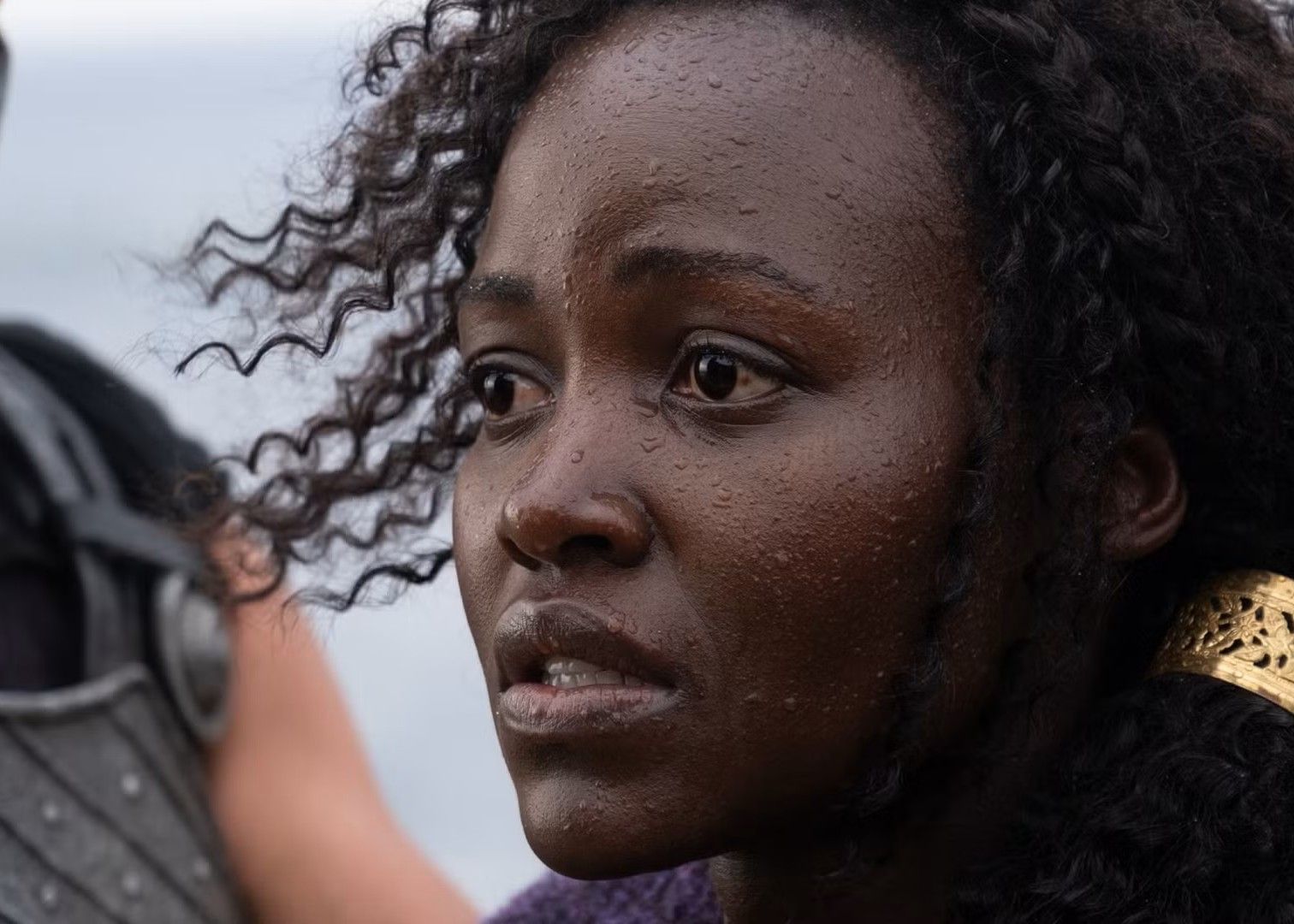
Almost fifty years later, the Western world cast the weight of its modern cultural anxieties onto Christopher Nolan’s $250 million IMAX retelling of The Odyssey, released this past summer, with Kenyan actress Lupita Nyong’o cast as Helen of Troy. That casting decision rang out like a declaration of war. A black woman was indeed the most beautiful woman in the world, and this was no DEI hire.
To be clear, as a black woman, I see how some diversity castings (usually combined with subpar production) have sometimes destroyed narrative beauty in film today. I too crave genuine fidelity in book-to-film adaptations. However, the debate was not just about the issues with color-blind casting, or whether an alcoholic, slightly psychopathic womanizer like James Bond could be black, or if a white Latina actress like Rachel Zegler could play Snow White. This uproar was more innate and malicious, and it felt that way to women like me. It was buttressed by the ugly Western premise that black women were inherently less beautiful, and thus fundamentally disqualified from the pinnacle of global desire.
By casting Nyong’o, Nolan actively engaged with the story’s deeper complexities and descriptive gaps. Homer’s literary checkmate is his refusal to describe the traits that make the most beautiful woman in the world so beautiful. In both the Iliad and the Odyssey, Helen’s physical features remain an enigma, a blank screen for the world to project its libidinous fantasies and cultural anxieties onto. Generic adjectives take center stage, terms such as Kallipareos, meaning “nice-cheeked,” and Leukolenos—“white-armed”—a status-denoting word to describe aristocratic women who were shielded from sun and labor.
While the internet may satisfy itself with promises of a full-length Grok AI-generated version of Nolan’s slightly historically inaccurate version of Homer’s Odyssey, Helen remains what she is—a phantom.
The application of racial purism to a half-goddess, half-woman hatched from a swan egg is quite odd: Greek mythology is based on a biological absurdity that examines the human condition through the tale of gods and goddesses and demigods and so on. Many have attributed European ancestry to Helen due to the circulation of a certain word, xanthos (meaning golden or brown or slightly blonde), used to describe Helen’s hair. But Homer doesn’t use that word. Sappho does, a century later, in a fragment comparing a woman she herself adored to a fair-haired Helen.
In his essay for the New York Times, “Does Matt Damon Look Greek? No. Stop Complaining About Lupita Nyong’o,” classicist Daniel Mendelsohn, who has dedicated years to studying Homer’s great text, points out that ancient Greeks cared much less about Helen’s physicality than her implied seductive power, strong enough as it was to cast honorable men to war.
In fact, ancient Greeks held Ethiopians in high regard. For example, Memnon, the king of ancient Ethiopia, was described as divine and a man of supreme attractiveness. For the Greeks, there was no aesthetic barrier in associating blackness with beauty or divinity. And if you trace the genealogy in Greek mythology far back enough, you will find that Helen of Troy is a close descendant of Andromeda, princess of Aethiopia through the House of Perseus.
The rejection of blackness in the Western media industry is the result of a billion-dollar visual economy that often sells an aestheticized self-hatred to women of color through the portrayal of fairness often being linked to attention and success. In India, the British Raj (1858-1947) intensified the nation’s fluid caste system through Social Darwinism and pseudoscientific racial theories to justify Britain’s economic exploitation. We see its effect in how Bollywood production teams lightened Priyanka Chopra’s skin through makeup and heavy lighting on set.
Even West Africa’s decades-long skin-bleaching epidemic reflects the social capital of fairness in Westernized multicultural spaces. Across every continent and country that has been trained by Western taste, light skin has come to signify luxury, while darker skin remains on the outskirts of desire.
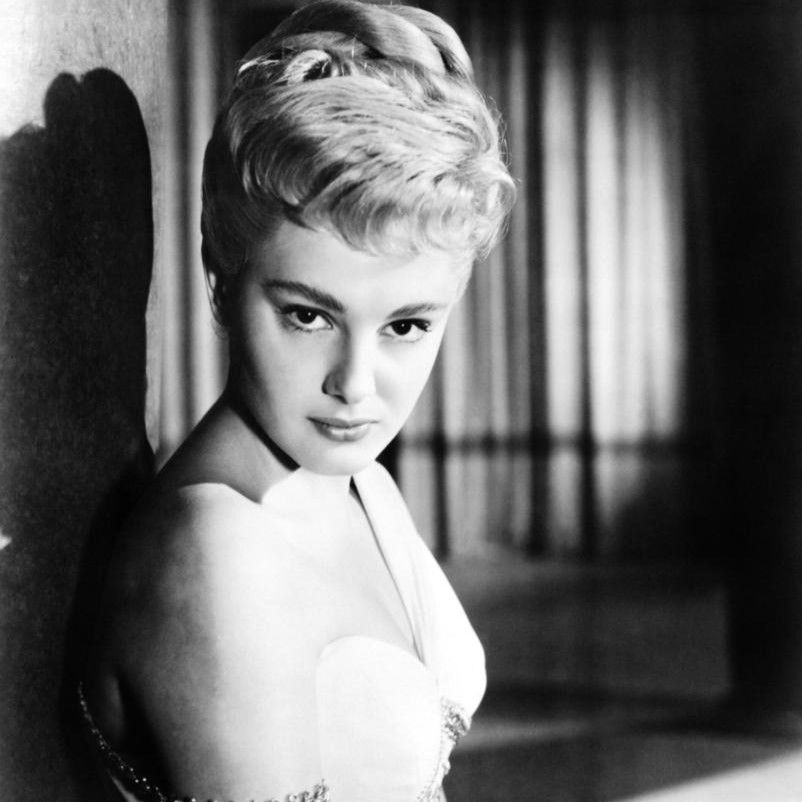
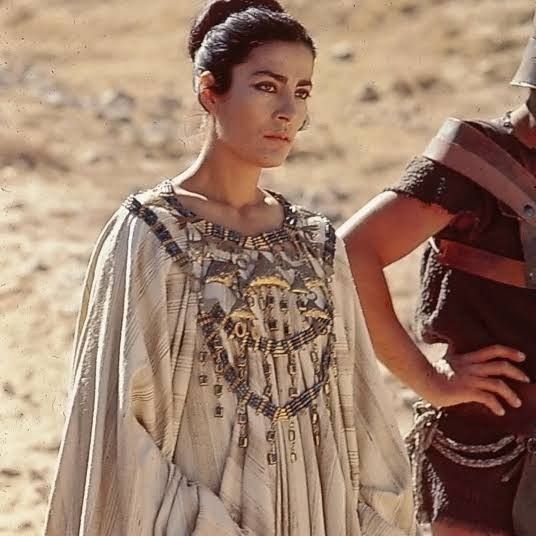
White Helen of Troy, Through The Years


Like Homer, Nolan plays with Helen’s ambiguity. In the film, when Menelaus (Jon Bernthal) mockingly confronts Helen (Nyong’o) over her scarred face and damaged eye, he claims that the tales of her world-renowned beauty were propaganda manufactured by Agamemnon to mobilize the masses for conquest. Unfortunately, we do not see Helen’s initial, flawless beauty before her war-ridden, scarred face (other than as a gilded twin, Clytemnestra). At the end of the film, Helen (Nyong’o) has a brief emotional encounter with Telemachus (Tom Holland), son of Odysseus and Penelope, where she delivers a crushing line, “Give my greetings to your mother. Tell her I’m sorry…I’m sorry for Troy and for everything that has happened in my name.” The myth of Helen that ten thousand men died for was never a woman of flesh and blood, but a convenient image—a dangling piece of goat meat in front of hungry, passionate lions. What can make men run if not supreme beauty?
The truth is we’ve always played with the inverse—black to white racial swapping, even when there was concrete evidence enough to point to a character’s dark-skinned and non-European physicalities: Laurence Olivier as Othello in the 1965 adaptation, Othello; Angelina Jolie with darkened skin as Mariane Pearl, a woman of Afro-Cuban and Dutch descent in A Mighty Heart (2007); Christian Bale as Moses and Joel Edgerton as Ramesses II in Ridley Scott’s 2014 Exodus: Gods and Kings; the illustriously sexualized version of Wuthering Heights (2026) directed by Emerald Fennell, casting an actor of Basque and British Isles descent, Jacob Elordi, as Heathcliff; or perhaps the casting of American-Irish and Romansh-Swiss actor Jim Caviezel as Jesus in Mel Gibson’s 2004 The Passion of the Christ, and all the other post-Byzantine depictions of Christ as a European, white-haired man, rather than as the Levantine Jewish rabbi he was, with his “hair like wool” and “feet like burnished bronze”—the description available to anyone who cares to look in Chapter 1 of Revelation.
Sappho in Fragment 16/the Anactoria poem cements a definition of beauty that has proved true ever since this film’s announcement: “The most beautiful thing on this black earth is whatever you happen to desire.” Nolan didn’t violate Homer’s classic; he fulfilled its purpose and forced a polarized world to confront its biases. He proved, after thousands of years, that a black woman can stand at the universal center of beauty—strong enough to launch a thousand ships.