Today, the ruling right-wing powers in this country are no laughing matter. The Constitution is in tatters, the weak are scapegoated, our allies are insulted and enemies given succor, and inflation and deficits are soaring. But the comedians coming from the conservative camp? Even a lefty has to admit they are funny as hell.
That's some real dissonance. Not long ago, the idea of a right-wing comic being genuinely comedic was as outlandish as a fake billionaire with a bad combover becoming president. The anti-LGBT, anti-safety net, anti-immigrant, anti-healthcare GOP was not only frightening but also deeply unfunny. Painfully unfunny, in fact—irrelevant to comedy, irrelevant to culture, of no real societal relevance at all.
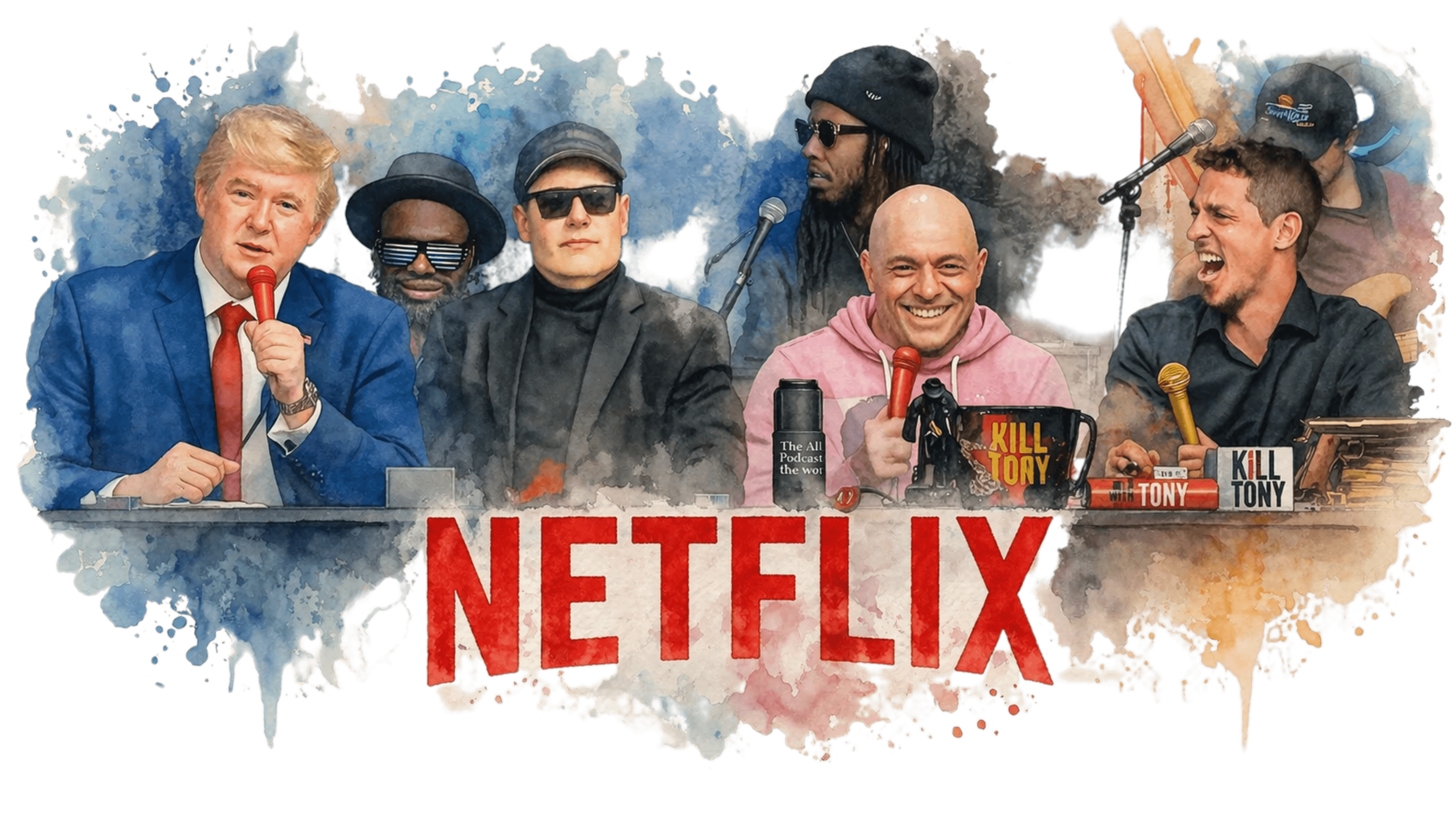
That is no longer the case. Today’s stand-up talents with conservative vibes are not only funny; they’re deeply central to this country’s cultural conversation. They host the most-watched podcasts, rack up enormous YouTube views, own the hottest comedy launchpad in the country, and have become omnipresent through social-media clipping.
The comedy ecosystem has changed. The center of gravity has moved from late-night television, prestige institutions, and other HR’d rooms to looser spaces that reward speed, iteration, and above all, the freedom to fail.
While the cultural left has increasingly policed away failure, with its inherent risk of offense or hurt, the nominal right has embraced it. The result isn’t moral superiority; it’s virality across every channel and by every metric.
Twenty years ago, during the quaintly compassionate conservatism of Bush 43, comedy had a similarly partisan bent. Jon Stewart took over The Daily Show in 1999 and rode an anti-Bush wave to the top of the ratings. In W, Stewart (and a young John Oliver) had the perfect straight man. Forget the politics—the guy misspelled, misspoke, gawked around awkwardly, and laughed along when everyone made fun of him. And while the jokes may have been political, they weren’t didactic; watching felt easy, never like being instructed. It was comedy-driven: fantastic craft and artistry with an even better butt of the joke.
Then, in the Obama era, a shift happened. Perhaps it had something to do with call-out culture, or with social media turning every misstep into a permanent artifact—but the incentives changed. The political argument began taking precedence over the craft of the joke. Hannah Gadsby’s specials on Netflix, Nanette and Douglas, were widely hailed.
The New Yorker described Nanette as a work that “critique[s] comedy’s tendency to strip away painful context in the pursuit of laughs.” And indeed, it was brilliant. But it wasn’t the funniest hour you could spend.
“When I first started it was, ‘If you’re not funny, get out.’ The rush to be funny first and funny last was the pressure,” Gadsby told Time. Fair enough. But when audiences feel they're being lectured—even when they agree with and learn from that lecture—well, they tend to laugh a lot less.
The left may have mistaken moral seriousness for artistic seriousness. Art is truth, but that truth is sometimes subjective. All art is, in some sense, in dialogue with its audience—but most forms allow that dialogue to unfold over time. A novel can win you over slowly. A song can grow on you after a few listens. Even a painting can be reevaluated years later. Comedy has no such luxury. It unfolds in real time, in direct exchange with a crowd. It’s funny or it isn’t. The room is either laughing or fidgeting awkwardly. The tricky question is why.
Humor, it turns out, has been studied rather intensely, and academics have identified simple frameworks for what makes a joke work. Peter McGraw (University of Colorado) and Caleb Warren (University of Arizona) call theirs Benign Violation Theory. According to the theory, humor occurs when something threatens one’s sense of how the world “ought to be,” yet still feels benign—such that both perceptions occur at the same time.
“The center of gravity has moved from late-night television, prestige institutions, and other HR’d rooms to looser spaces that reward speed, iteration, and above all, the freedom to fail.”
A comedian violates a norm while the audience remains safe in its seats, unharmed and unthreatened. When the penalty for a failed joke rises—sometimes to the level of cancellation or career loss—comics take fewer risks. In other words, they get less funny.
Back in the day, the GOP and Christian conservatives were the ultimate normies. So for them, violating a “norm” was not in the cards.
Today, in many left-coded comedy spaces, there’s a long list of rules meant to keep language from causing harm. These concerns come from a good place and have made things better for a lot of people. But they’ve grown onerous.
Figuring out how to violate a norm without breaking a language rule is hard, while the consequences for misjudging that line are steep. The result: left-wing comedians are often given scant room for failure. And that lack of grace stifles the art.
Watch an episode or two of Kill Tony, the most influential and widely watched comedy incubator of the moment. You’ll see an array of comics far more diverse than a Bush-era Daily Show lineup—gritty Bushwick diverse. It’s easy to pull a clip that makes the show seem despicable, and in a vacuum many of the jokes are. But context matters. Whatever the race, orientation, or politics of the guests doing their one-minute sets, the hosts are oddly warm.

They razz the way an older sibling might razz. Getting made fun of means you belong. Even after a flop, guests often redeem themselves in the interview portion. For better or worse, it’s a space where almost anything can be tried. On a recent show, a comic made a George Floyd joke. The comic was Black. And gay. He took a risk, and it worked—even if it left me, a white liberal, feeling a bit disturbed.
Kill Tony functions as an improvised, brutally honest comedy workshop—a fundamentally different ecosystem from late-night television. Andrew Schulz has described it as stand-up boot camp: becoming a regular means pumping out new jokes every week. No limits. No creative censors. Just make jokes that are funny—or flop. Kam Patterson has said the show launched his career. The young Black comic is now a cast member on Saturday Night Live (though he's said he may not return next season).
"The result, left-wing comedians are often given scant room for risk—and that lack of grace stifles the art."
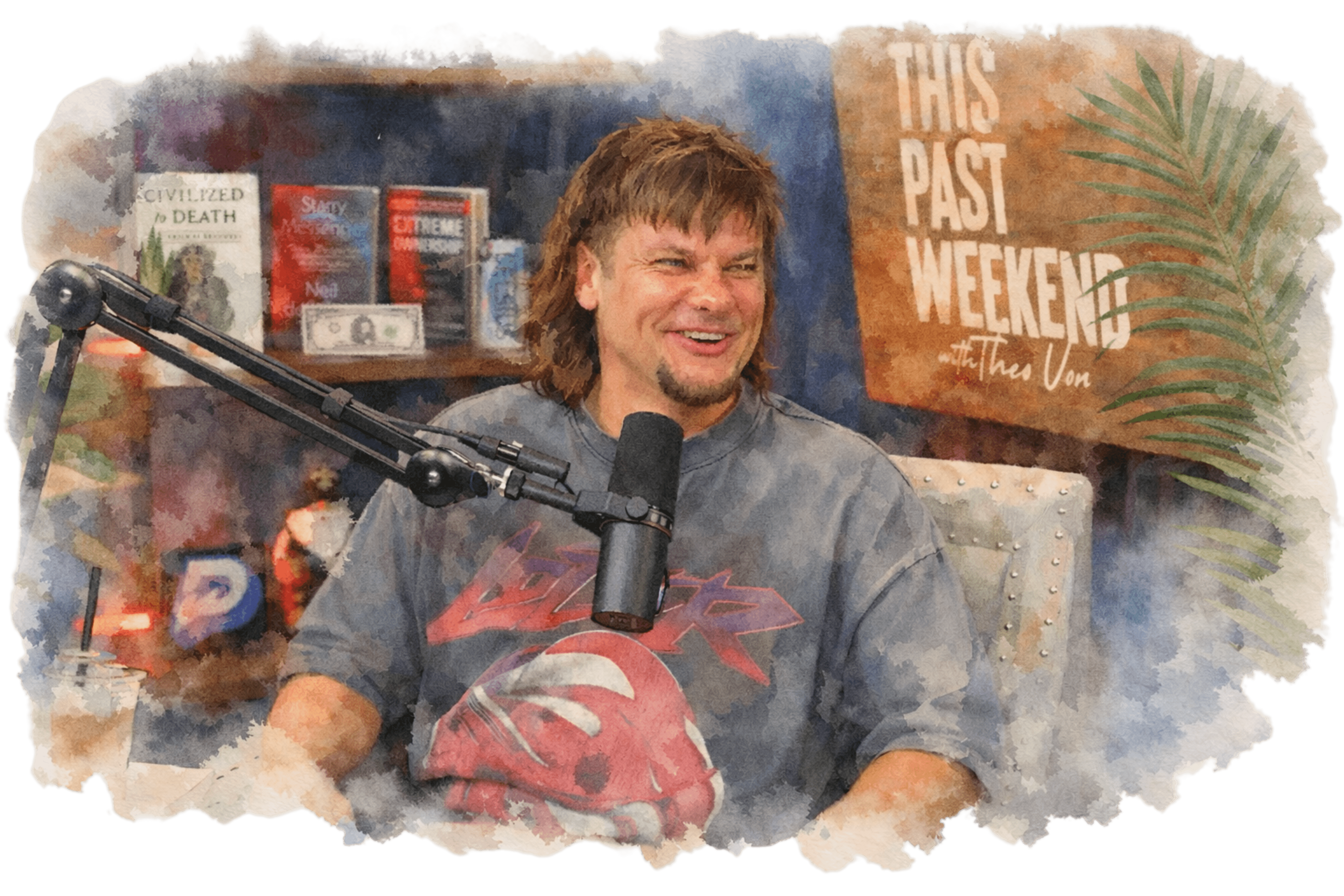
On the morning of January 20, 2025, Theo Von—whose appeal lies less in ideology than dumb curiosity—arrived at Donald Trump’s inauguration. With him were Shane Gillis and Joe Rogan.
For the last few years, these figures have become omnipresent. Rogan’s interviews with Trump and JD Vance are widely perceived—particularly among Democrats—as having played a meaningful role in shaping the media environment around the election. The world is laughing at their clips, but also living under the political system they’ve at least nominally supported.
Theo Von is many things—an aw-shucks podcaster with a rambling kind of humor, a recovering addict—but a firebrand he is not. At the inauguration, he managed to break his chair and fall to the floor. It was as if he and the universe were questioning if he really belonged there.
My first memory of a Von clip crossing my feed was a call-in segment: a fella also named Theo asked Von for advice on becoming a man. This Theo was transgender.
“Maybe try taking up chewing tobacco,” Von suggested. The call ended with an invitation to man world, delivered in Von’s signature twang, “Red rover, red rover, send Theo on over.”
It was heartwarming at the time. It still is—but empathy without ideology can be disconcerting to those of us indoctrinated to believe the two always go hand in hand.
Tony Hinchcliffe—the eponymous host of Kill Tony—didn't attend the inauguration. But three months previous, he did perform a set at Trump's big Madison Square Garden rally. His jokes denigrating Puerto Rico horrified a lot of people. It felt mean. It was mean. Worse, from the stage at the Garden, it conjured memories of the Nazi flag-waving American Bund rally held there back in 1939.
Context is everything. This was not a safe space. Madison Square Garden is not a creative backroom where everyone watching understands the deal. It was a moment that called for humility. He didn’t show it.
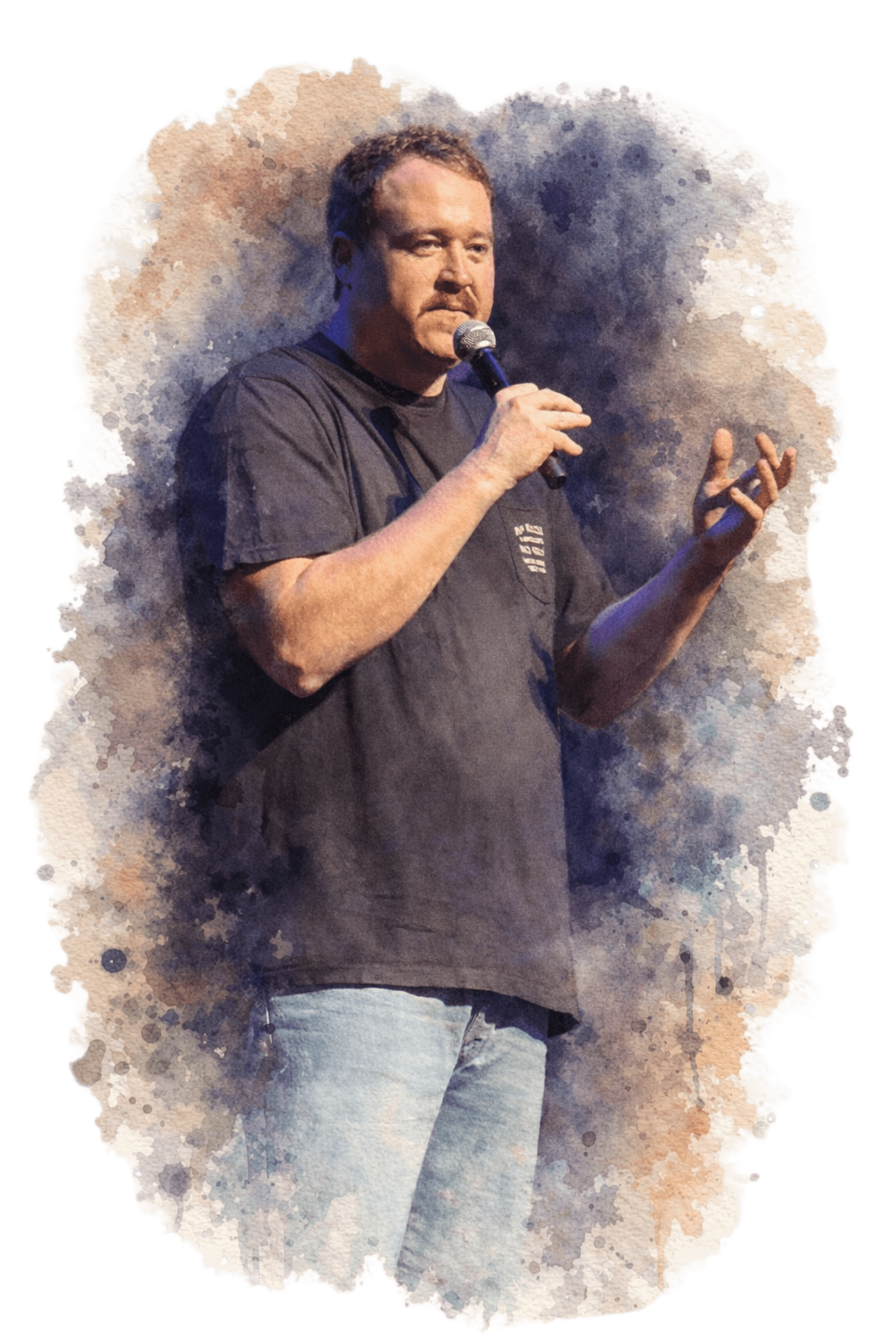
The difference wasn’t the joke; it was that setting. The same sensibility that thrives in a risk-tolerant room can fall flat—or even crossover into incitement—when the context changes. Punching down is one thing. Punching down when the audience laughing actually wants to throw punches, that’s quite another. Yes, the freedom to fail is creatively powerful, but it isn’t always portable.
Which brings us to Shane Gillis. Taking a path opposite that of Kam Patterson, Gillis was canceled off SNL and ended up a host on Kill Tony. There, his Donald Trump impressions are cutting—deadly. They dig at Trump in a way that feels more intense than most traditional left media can muster. Maybe it’s his inside track that sharpens the blade. Or maybe it’s his willingness to bite the hand that feeds him as long as it gets a laugh, whether that hand belongs to the left or the right.
He’s recently taken Trump, ICE, and even Joe Rogan to task over DHS videos making light of deportations. In a sense, he understands context in a way that Hinchcliffe never has. Whatever his personal politics, Gillis is proof that an ecosystem that rewards risk can still produce real political critique, not just transgression.
What these comics share is an anti-pious, anti-institutional instinct. They mock performative virtue but often demonstrate real empathy. Some of what the left calls “harm” is actually a reaction against sanctimonious moral policing. The two are not the same—though they sometimes overlap.
It’s okay to say some jokes are ugly. Comedy isn’t a license for wanton cruelty. But if the only acceptable humor is the kind that could never possibly cause harm, then we’ve outlawed one of the two main ingredients of a good laugh.
Comedians aren’t meant to be moral philosophers. They’re meant to be funny. Sometimes a bad joke is just a bad joke.