

At one point early in her career, Jessica Henwick pulled an all-nighter blowing up balloons.
The Surrey-born actress was scraping by in Los Angeles, making ends meet working as a set dresser on film sets. The task? Prepare a wedding scene that required roughly two thousand balloons. When the production’s air tanks ran out, she had to finish the job by hand—or rather, by mouth.
At sunrise, the actors wandered in, complaining about the early call time. “I stood up and said, ‘I quit,’” she laughs.
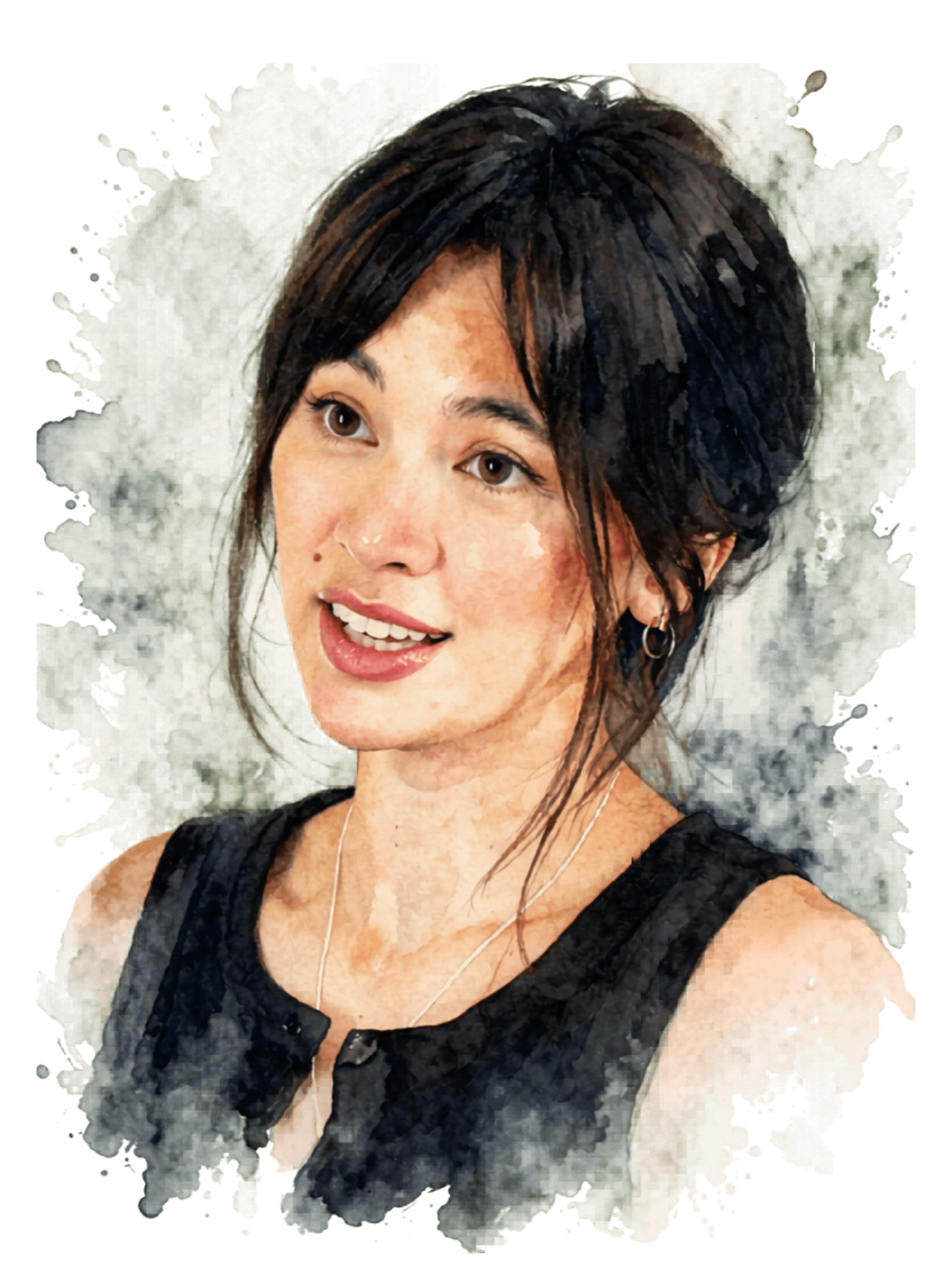
It wasn’t exactly a glamorous beginning to a career that would eventually pass through Game of Thrones, a Marvel and a Star Wars role, and the recent film How to Make A Killing. But Henwick, whose mother is Asian, says that growing up in England in the 1990s and 2000s, she didn’t see much of a blueprint for someone like herself in the industry anyway.
Right now she’s getting critical raves for her portrayal of one corner of a love quadrangle on Netflix’s Vladimir, opposite Rachel Weisz. It’s one of her meatiest roles to date—questions of female gaze and desire meet complex mental health and agency issues. So how did she get past the balloons?
Jacob Mendel Brown: What happened after the balloons?
Jessica Henwick: I ran out of money! My meager savings disappeared pretty quickly and I realized something just wasn’t working for me in LA. So I went home, and had to confront the possibility that maybe I’d just found this thing I loved and suddenly it was out of my grasp. Looking back, I was probably going into auditions with an air of desperation. The moment I thought, oh, it’s over, none of this matters—that’s when things started happening.
JMB: What was the turnaround?
JH: I got a play, which led to a TV series called Silk. That led to Star Wars, then Game of Thrones, then Marvel, and so on and so forth. I’ve been very fortunate. The ball has been rolling ever since.
JMB: Was there a particular big break moment?
JH: I feel quite steady. I don’t feel like I had that overnight moment. But working on the Marvel shows, playing Colleen for three years did change my life drastically. Suddenly I was on lists I hadn’t been on before—financiers’ lists. It was also the first time I felt like I had a community around my work. I started realizing people were recognizing me or connecting with what I was doing. When we were at our peak with Marvel, I was living in Monterey Park, which is a largely Asian community in LA, and I would get stopped pretty constantly. That meant the world to me. When someone comes up and says, “You were the first time I saw myself on a screen,” that’s an incredible thing to hear. Marvel fans are amazing in my experience, and it really did feel like we were part of something larger happening. Around that time there was this big shift in the appetite for Asian stories. Crazy Rich Asians pushed it full tilt, but you could feel the momentum building.
JMB: Your new series Vladimir hits some serious issues. Postpartum depression, a previous suicide attempt. And it’s also a very female-led narrative.
JH: My character, Cynthia, is recovering from a very deep depression when we meet her, so she’s just trying to take things one day at a time. What I liked about the story is that the relationships don’t play out the way you expect. It’s not a situation where two women are competing for the same man and hating each other. Cynthia and Rachel’s characters actually develop quite an interesting friendship. I start to sense a kind of sexual tension between them, but the dynamic goes in a direction that feels surprising. The show itself is very unique. It’s stylish and it’s a little wild. I’m really curious to see how audiences respond to it.
JMB: You also write and direct. Does that feel different creatively for you?
JH: Not really. I think of them as different strings to the same bow. For me it’s always been about storytelling. Acting is my first love and I don’t think I’ll ever quit—although the industry might quit you. But right now I am very interested in being behind the camera. Something about it feels really exciting to me. I’m drawn to projects where people are really carving out their own voice. We’re so oversaturated with content now that for me to sign on to something, it has to feel different in some way.