


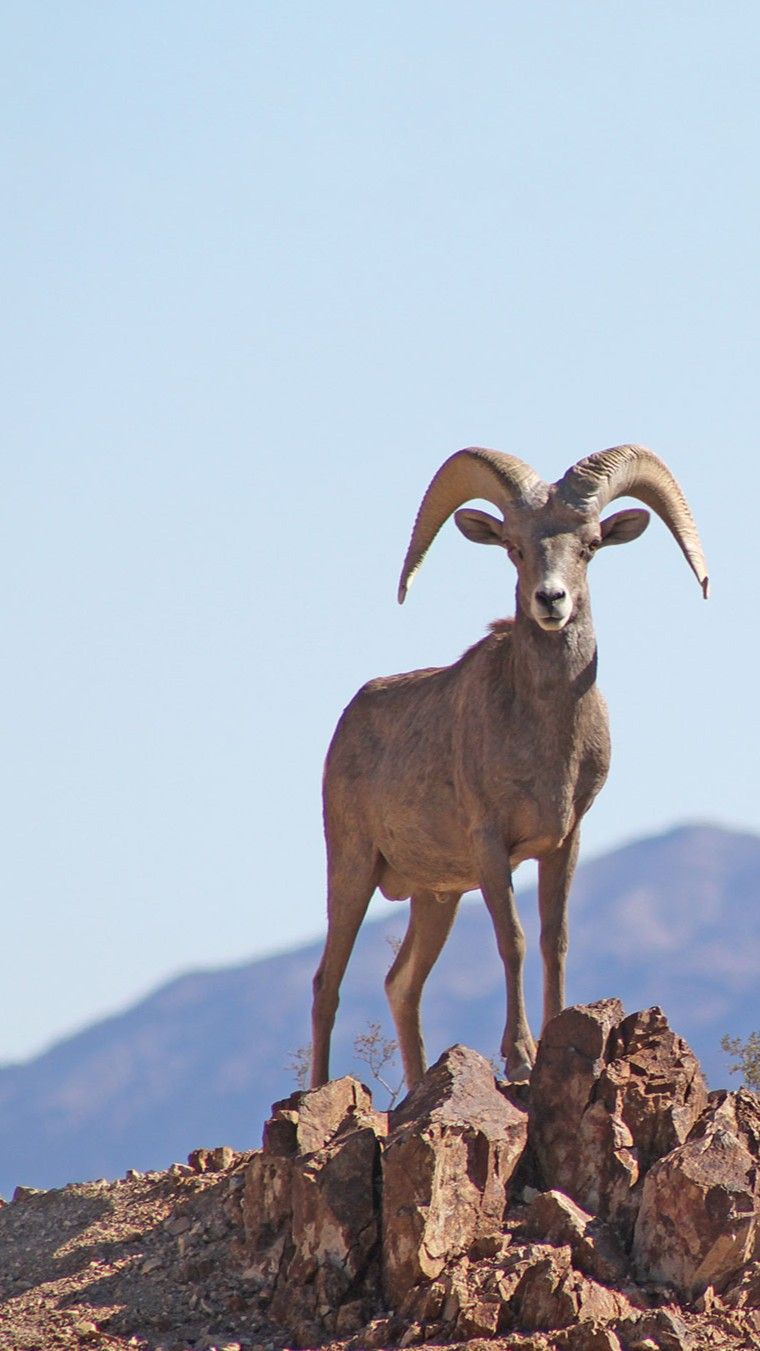
In big cities across America, phones ping with the latest terrifying headlines while thumbs scroll through the algorithmic ragebait none of us can escape. Meanwhile in the middle of nowhere, Utah, a desert bighorn sheep scales the red rock plateau of Moab.
Up the canyon he climbs until reaching the 4,000-foot peak where the thin air is cool. Ovis takes a sweeping look over the dry expanse and launches his 200-pound body off the cliff, head down, horns first. A physical metaphor for the zeitgeist—his keratin and bone impact rock with a tectonic crash. Unlike with humanity, evolution has given sheepkind sturdy horns and agile hooves, and he is fine.
Except this practice of sheep-jumping isn’t real. Early explorers believed these American ungulates engaged in the reckless practice of bounding horns-first into the earth. The absurdity of the sheep’s eponymous crown gave way to a horror vacui of biology. Like cartographers scribbling monsters in the margins of maps, early explorers used folklore to explain what they didn’t understand about animals.
As in much of life, the real reason male Ovis canadensis' horns make up a fifth of their body weight is mating display.
The scene goes as follows. Two rams stand before a gravid female. They lock eyes and backtrack ten paces. They bow then rear their hooves. In an act of career military men, they bleat a warning before the charge. Commence the rut. Horn hits body until fur hits ground. The weaker individual relents lest he meet a bloody end. The loser is typically the younger individual with smaller horns. Size matters in the Southwest.
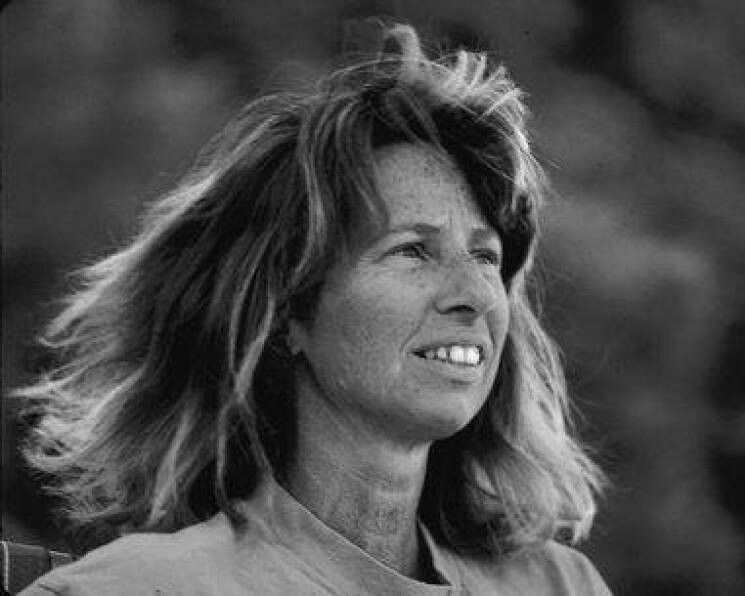
The rut is the extent of sheep knowledge most possess. To be fair, it is one of the most dramatic scenes of American biota. But Ellen Meloy knew there was much more intrigue in sheep dynamics. She lived among them for a year, penning Eating Stone (2005) as her caprine dispatch. Meloy’s bibliography centers almost entirely on the desert in which she lived. Her prose humanizes wildlife in a profound way. Though she would likely take umbrage at that description: the value of flora and fauna should exist beyond the conception of people. What they do is largely unseen and most have existed on a timescale surpassing the entire genus Homo.
Take the eye of a sheep. Its horizontal pupil is the depiction of evil, an ocular geometry divorced from human sight placed upon the body of Baphomet. A lack of understanding of these differences has led to vilification. The pupil is shaped this way to allow for a wide line of sight. Sheep are prey animals who must constantly scan for predators. The horizontal pupil remains parallel with the horizon as they bend their necks to graze. They must scan for sneaky cats behind the bush.
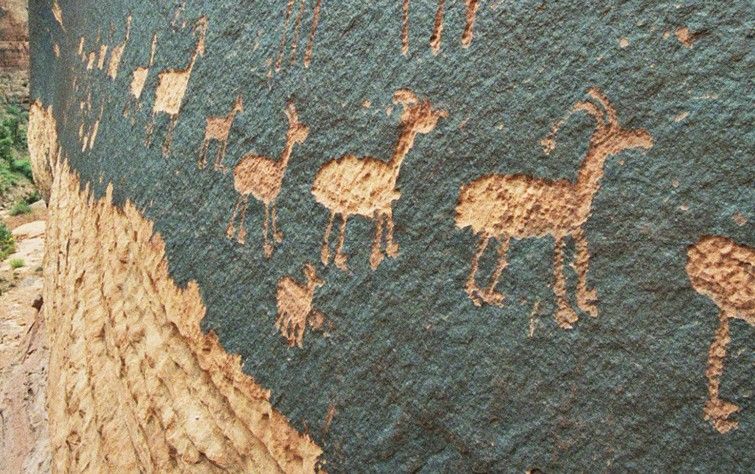
For desert bighorn sheep, their habitat is protection. The sparse vegetation of the arid environment leaves fewer hiding spots for cougars. Introduction of non-native plants that grow full and provide cover is a concern. But since the late 1800s, the largest threat to bighorn sheep has been other sheep. Their woolen cousins, Ovis aries—the species most of us would just call “a sheep”—spread disease under the domestic regime of man. Ranching in bighorn country introduced scabies to wild populations and rapid decline occurred.
Sheep are herd creatures. Isolated living is not what they evolved to do. Meloy writes, “Alone, a bighorn is more vulnerable to stress. I do not want wild sheep to be lonely.” Her wish was not granted. She was distraught over a single ewe she’d come to know in New Mexico whose herd had succumbed to scabies. She was rarely if ever seen; a radio transmitter served as sole proof of life.
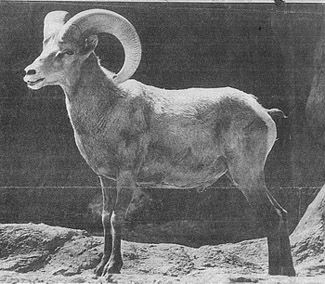
The contact between humans and the last native bighorn in the Chihuahuan Desert is this radio bleep, this ripple of invisible waves on the electromagnetic spectrum, waves long enough to bend around the curve of the earth. The waves undulate across five miles of broken winter desert, from one mammal's neck to another mammal's ears. SAE 067's signal comes as a faint blip. I think of it as a heart monitor.
San Andres Ewe 067 was the last remaining bighorn in that mountain range. She had no horns. One was torn off during capture for medical tests in 1999 and the second was inexplicably missing when she reappeared several years later. She must have sacrificed it in a fertility ritual for she was also joined by a lamb. Population surveys in the region always tallied one. It is unknown where she encountered the male who sired her offspring. But now the count tallied two.
Meloy lightens these bleak sentiments with wry humor. On one expedition she spots a group of rams on an island. The females stand on the riverbank. When Meloy asks why the sexes are segregated, a biologist friend replies, “The river is a firm boundary. The ewes won't cross it. They hate to get their feet wet.” This is the answer given to a child: flippant, lacking, devoid of meaning. It’s funny. Meloy thinks so. She returns to it three times this chapter.
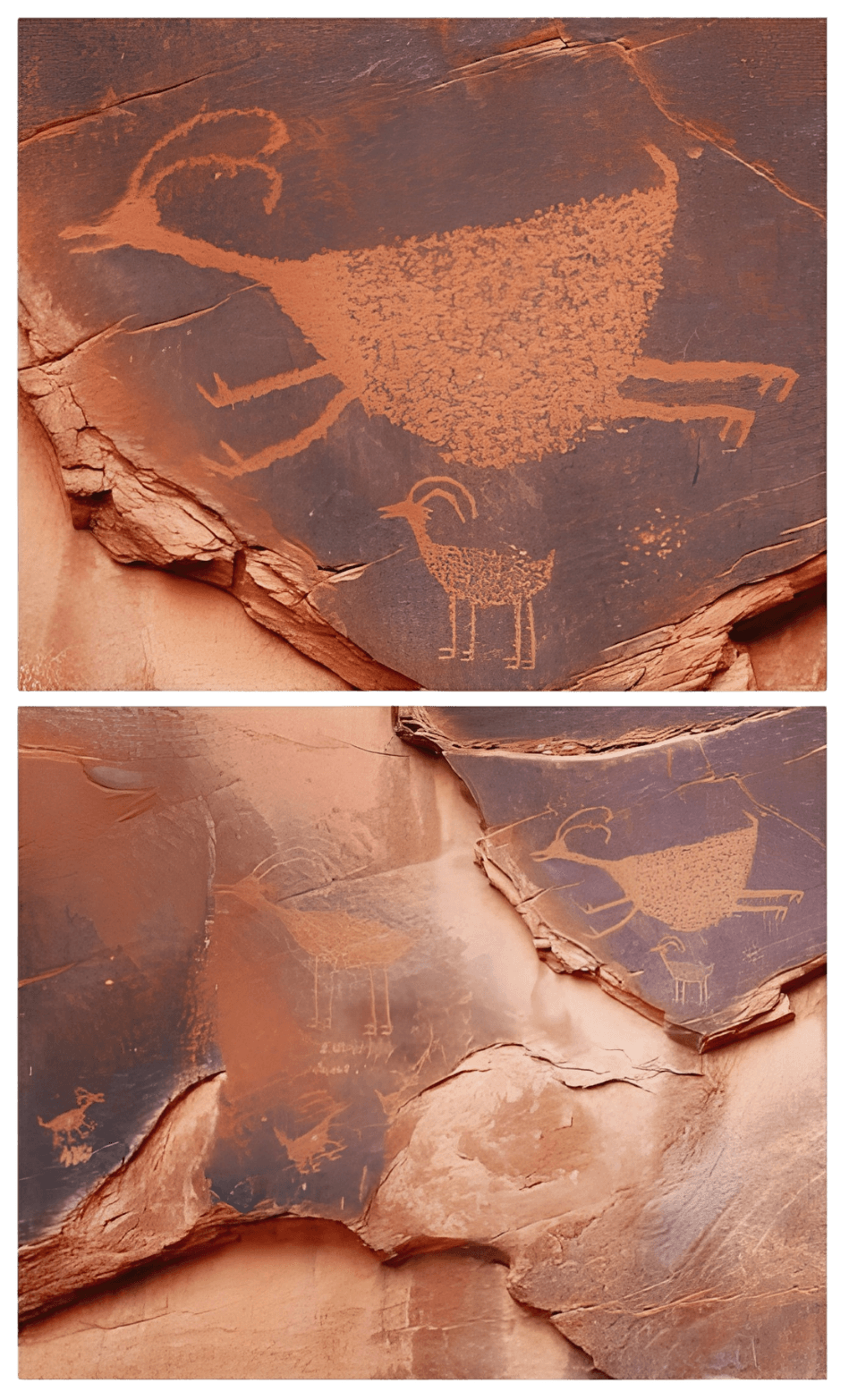
Later, she travels to California to study bighorns with a population ecologist named John Wehausen. They stand in the Sierra Nevada, looking east through the Owens Valley to the White Mountains. Each range has a resident band of sheep. Though just twenty miles separate the groups, they rarely mix. They are so isolated that the western-side sheep display broader skulls and wider horns. It is unknown why they refuse to cross the valley and swap genes. Meloy writes, “Perhaps one of those ‘They don't like to get their feet wet’ explanations might do.”
Commence the rut. Horn hits body until fur hits ground. The weaker individual relents lest he meet a bloody end.
One of Meloy’s talents is turning an offhand remark into a universal case study. Her ability to expand upon the smallest detail propels the reader through the chapters. One becomes engrossed and obsessed along with her. It’s just as she puts it, “I am here to learn something. I will need this knowledge. Time is running out.”

Time is central to Eating Stone. The chapters are divided by month. Nature is seasonality. Breeding only occurs in months where food is ample. Plant growth is only sustained when sunlight outpaces night. Inherent in the pursuit of life is death. The end of an individual's life is the end of an individual’s time.
Ewe 067 was the dodo of her population due to human impact on the environment. Decades of disease left her a pariah in the desert. But in the twenty years since the publication of Eating Stone nearly all North American bighorn sheep populations have increased. Concerted conservation efforts bucked the trend for global wildlife, which has declined at an alarming rate. Meloy’s cohort of environmentalists seem like the last generation to have had a chance at course-correcting the current ecological collapse. Before 9/11, radical environmentalists were identified as a top threat to the security of the United States.
"I run my hand over my hair to understand the touch of sun on the bighorn’s back.”
The Earth Liberation Front was the premier engine of ecoterrorism and corporate sabotage in the 90s. Through loosely affiliated cells around the country, they sought the end of environmental exploitation for profit. Tactics included sleeping in trees for months to halt logging, planting bombs in automobile manufacturing plants, and arson of genetically modified crop fields. Their faunal counterpart was the Animal Liberation Front, most famous for nighttime raids on factory farming facilities. Imagining such direct action in the current day is laughable. The populace is stifled by feelings of unending stasis.
In any case, dwelling on momentum lost is not good. There is much work to do. Learning your local ecology is the most important objective in life. If not because you are a would-be ecoactivist, then because it is the ultimate escapism to the present.
Sit before a weed on the sidewalk and learn its name. That helion eruption in the late fall is seaside goldenrod. Taken by its beauty, you do some research and learn it is the scapegoat for hay fever. This is impossible because its pollen is not wind-dispersed, but spread by insects. You have cleared its name. It’s what Meloy would want.
There is immense grief in realizing she is no longer here. Eating Stone was published posthumously by her husband, Mark. Ellen died in 2004 of a heart attack or aneurysm. These pages are her last. In them, she writes of brain fog, lost thoughts, compulsions for order. She documents these sensations between lines of hoof and sand and light. Her devotion to the wild is admirable beyond words and her insight into the present moment is desperately needed. But even as a writer, Meloy knew that words could not convey feeling: “I run my hand over my hair to understand the touch of sun on the bighorn’s back.”
Feeling is everything. It is the underlying explanation for why any organism engages in any action. The feeling of photons bouncing off the edge of a sensitive cell led to sight. The feeling of vibrations in the air led to hearing. The feeling of airborne particles against the skin led to scent and taste. The feeling of feeling led to touch. A need to interpret these sensations led to thought.
This basal animalian response to stimuli is the same among all creatures. The warmth of the sun powers nearly every system on Earth. Its rays warm Meloy’s bare arms, or yours, or mine, as they warm the coarse coat of a sheep.
What is that feeling? This is my planet. And I am home.