
Nothing’s more interesting than a man with an obsession. Mickey Boardman, the iconic longtime editor of Paper Magazine, has many. Among them: the comings and goings, the gossip and gowns, the family trees and family secrets of Europe’s royals. Across his Substack, his Instagram, his journalism, and his decades of party RSVPs, Boardman’s joyful relishing of his favorite tiara-toting ladies of high birth has been a constant—an innocent pastime, a glamorous distraction shared with his readers and followers.
But for Boardman, who aside from being a dedicated royalist is also a committed leftist, the era of No Kings has left him wondering what exactly it means to love royalty while opposing the politics that so often surrounds it.
Jacob Mendel Brown: So where did this obsession start?
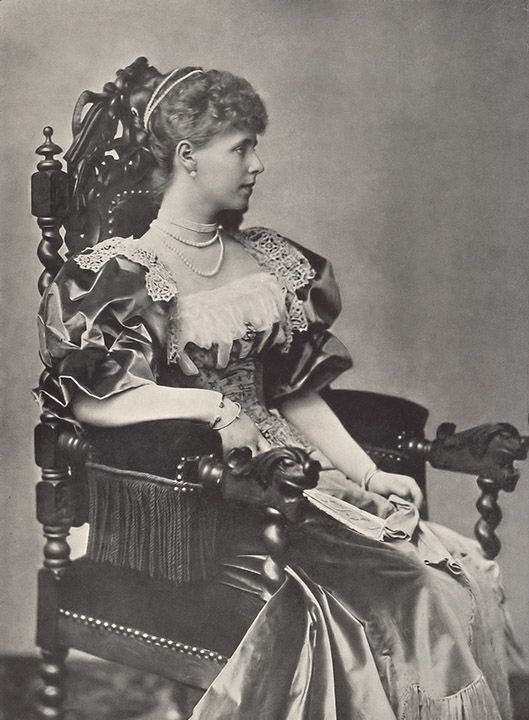
Mickey Boardman: Not being one to break gay stereotypes, I’ve always loved pageantry, tiaras and gowns. But the thing that kind of set it off was a book, The Last Romantic, by Hannah Pakula. It's about Queen Marie of Romania, who for me is the icon of all time, royal history-wise. A lot of my royal history loving is built with her at the nexus.
Her grandmother on her father’s side was Queen Victoria. And her grandfather on her mother’s side was Tsar Alexander II of Russia. And she was, like, some kind of cousin with everyone, the Queen of Spain, the Crown Princess of Sweden, the Emperor of Germany, the King of England, the Emperor and Empress of Russia. She was basically related to every royal in every royal family.
JMB: Tell me more...
MB: Well, she became a huge media phenomenon at the time. And she was exactly what I like in a person, by which I mean she was extremely gorgeous and extremely vain. The quotes from her are bananas. One of her famous lines is, “I rejoice in my beauty. Men have taught me to.”
There's so many. Some grandchild or relative found a note that she had written stashed away in a drawer or on a table or whatever that read, “Marie of Romania, a woman like that is born once in a century.” She had written that down about herself!
King George V of England was her first cousin and was in love with her and probably asked her to marry him. But Marie’s Russian mother did not like the English royal family and felt like it wasn’t a good match. So she made her daughter, Marie, say no. She could have been Queen of England!
She ended up marrying the crown prince of Romania, who was kind of nerdy. He became a king, so in a way he was a great match, but on another level, it was not the dream for her. She ended up being perfect for Romania, though.
JMB: It's a lot of high drama.
MB: There’s a letter from Empress Alexandra to her brother talking about Marie, who she called Missy. She’s basically gossiping. She’s like, You know, the problem with Missy is she’s so spoiled and crazy, because from the time she was a child, everyone said, oh, you’re pretty, oh, you’re so talented.
And I just love the idea. I love that the royal families are sort of like a soap opera. They’re all related, they all gossip, and they all meddle.
Of course the outcome is horrific, but even World War I… it’s basically like a soap opera plotline. The King of England is going to war against his first cousin, Kaiser Wilhelm II, who he can’t stand.
And the Kaiser is super competitive, because his mother was English, and he felt like she didn’t love him enough, and because his arm got fucked up when he was being born, and they pulled him out with forceps.
But really, my sweet spot is Queen Victoria’s grandchildren. Slightly less impact on geopolitics and world peace.
JMB: The grandchildren of Queen Victoria were basically the Kardashians of their time. Suddenly everyone could read newspapers and they became the first celebrities.
MB: Absolutely. It wasn’t the sort of critical press coverage that Meghan Markle or Diana faced. There were tabloids, but celebratory. They were kind of, in a way, the movie stars of the day.
When Marie came to America as Queen of Romania in 1926 on a tour it was, like, craziness.
JMB: It’s funny though, because so many of these figures are like Frederick the Great—a gay music lover who was also kind of terrible.
MB: Yeah. I mean, obviously some more horrible than others. The root concept of hereditary wealth and power is hideous, because sometimes you get lucky and you get a Marie. But then other times you get her son, who was hideous. He ended up leaving twice, like abdicating to run away with some whore. But no. Let me stop myself. I’m trying to rethink and be nice about the whores.
But the point being, it’s crazy that the leader is randomly chosen because he's the oldest boy. Or now, she's the oldest child.
And you know, I loved Queen Elizabeth II, but the diamonds were from India. There’s so much stuff that should all be sent back. It’s all very problematic.
JMB: Not all scandal is fun.
MB: The thing I love about Marie is that she had the glamour. She had affairs. At least one of her children probably was not fathered by the King.
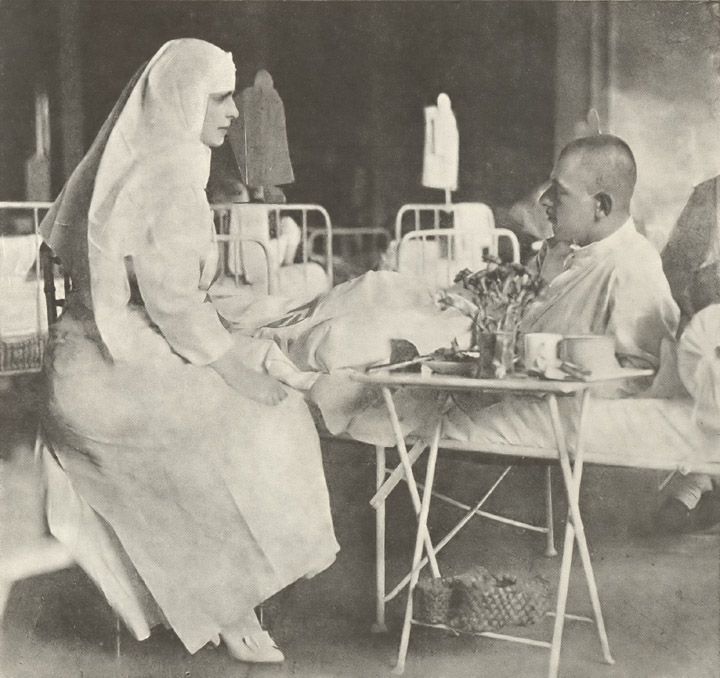
But then when World War I happened, and she rose to the occasion. She was at the front lines visiting the army, going to cholera camps, refusing to wear rubber gloves when soldiers kissed her hand because she said they shouldn’t have to kiss rubber.
Then she was sent to the Versailles Peace Conference and everybody fell in love with her. So she went from being this vain, sort of silly person to being the heroine of her people.
They called her Mama Regina. That’s my kind of transformation story. The glamor and the grit. I like people who have both in them.
JMB: A great arc. A perfect series finale. But ok, so elephant in the room. This is a weird moment to be a royalist.
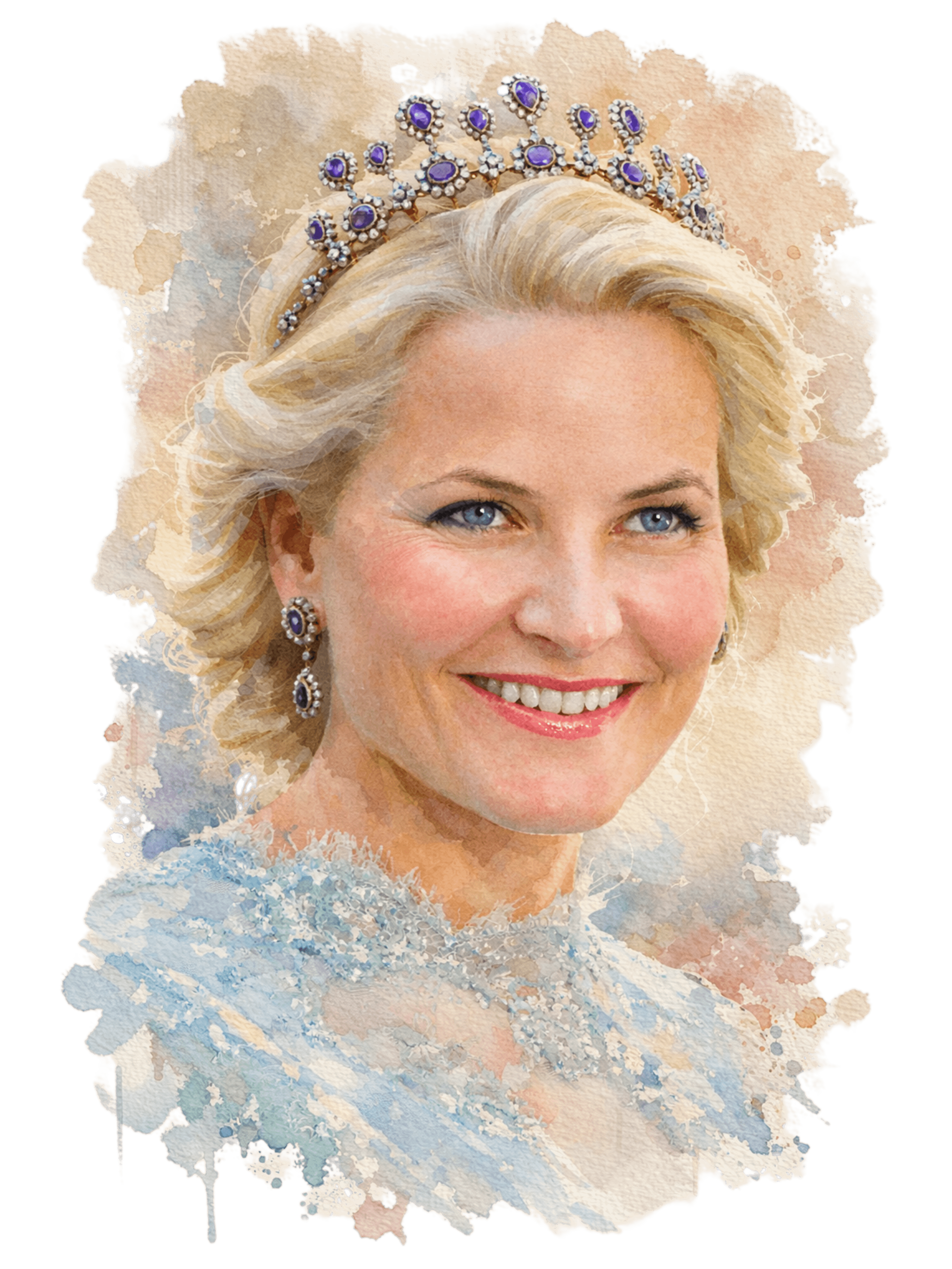
MB: It certainly is. I’ve been talking about this so much lately. The Crown Princess of Norway is ruining royal families for me. Andrew and Fergie are ruining royal families for me.
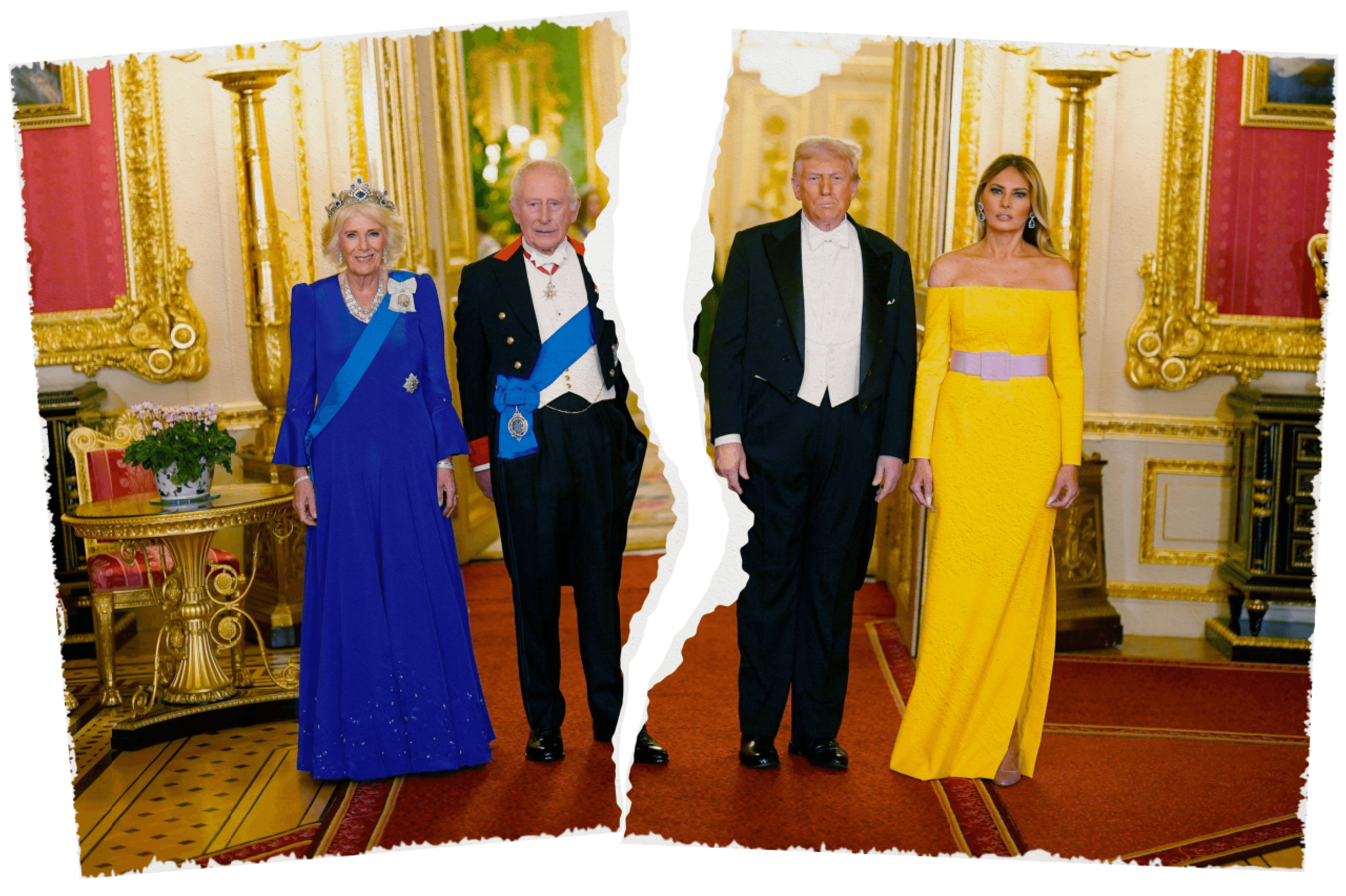
It’s the same way Melania Trump is ruining rich ladies for me. I always loved rich ladies. Agnes Gund, Bunny Mellon, Jacqueline Kennedy Onassis—glamorous and rich but doing good things for the world.
But the rich people of today are Jeff Bezos and Lauren Sanchez who contribute basically nothing to the world as far as I’m concerned. So my new conflict over royals is, in the grand scheme of problems happening today, it’s completely minor. But it becomes part of a larger question of whether you can still admire someone, or still be friends with someone, whose politics you think are destructive.
"The Crown Princess of Norway is ruining royal families for me. Andrew and Fergie are ruining royal families for me.
It’s the same way Melania Trump is ruining rich ladies for me."
JMB: Have you ever had that moment with someone you actually know?
MB: Yeah. I mean, for example, I love Gloria von Thurn und Taxis. In the '80s she was this huge media sensation. They called her the punk princess. She would wear Christian Lacroix pouf dresses with pink punk hair and ancestral jewels. She married the richest man in Germany, and for his 60th birthday she hired Prince to perform at the palace.
When her husband died she took over the family fortune and everyone thought she was going to destroy it. Instead she ended up saving it. She sold jewels, sold art, restructured everything. She was an amazing businesswoman. But she’s also extremely Catholic and very conservative. She goes to church every day and she’s best friends with Steve Bannon.
And it’s like…how can I like her? How can I be friends with her? How can I think she’s fabulous when she’s friends with Steve Bannon? So that’s the kind of thing where you realize the world is more complicated than the little boxes you put people in.
JMB: But you’re not ready to give up royals completely?
MB: Definitely if someone brings scandal to the family business they should get the boot, absolutely. But I’m not yet at a place where I’m like, break out the guillotine, abolish all royal families. There’s nothing like a royal wedding or a royal funeral to really get me going. Nobody does pageantry like the royals.